



If “fun” is the most visible value of Team Building, then Business Value represents a deeper layer of value that businesses are increasingly paying attention to.
Business Value in Team Building is the value a business gains from positive changes in capabilities, behaviors, and the way teams collaborate, contributing to better work performance and the ability to achieve shared goals. Team Building does not directly generate revenue or profit; rather, it creates a process of experience → learning → behavior change → improved team performance.
A well-designed program can help employees communicate better, collaborate more effectively, make better decisions, adapt more flexibly, and take greater initiative. When these changes are applied to everyday work, Team Building can truly create Business Value.
Therefore, the question is not only “Was the Team Building fun?”, but also: Did the team experience positive changes after the program, and do those changes create real value in the workplace?

Better Communication – More Effective Communication
Communication is one of the most visible capabilities revealed during Team Building challenges, especially when information is limited or participants are restricted in how they can communicate. To complete a task, participants must listen, share information, provide clear instructions, ask questions, confirm understanding, and adapt their communication style to the person receiving the information.
For example, one team member may have important information but is not directly involved in carrying out the task, while the person executing the task does not have access to all the necessary data. In this situation, the outcome depends on whether the information is communicated accurately, completely, clearly, and at the right time.
Issues that may be difficult to notice in the workplace suddenly become much more visible: Are we really listening? Are our instructions clear enough? Has the other person understood correctly? When something is unclear, do we ask for clarification or simply make assumptions?
This direct experience is where much of the value lies. Rather than simply talking about “effective communication” as a concept, Team Building creates a situation where the team can experience it firsthand, see the consequences, and reflect together.
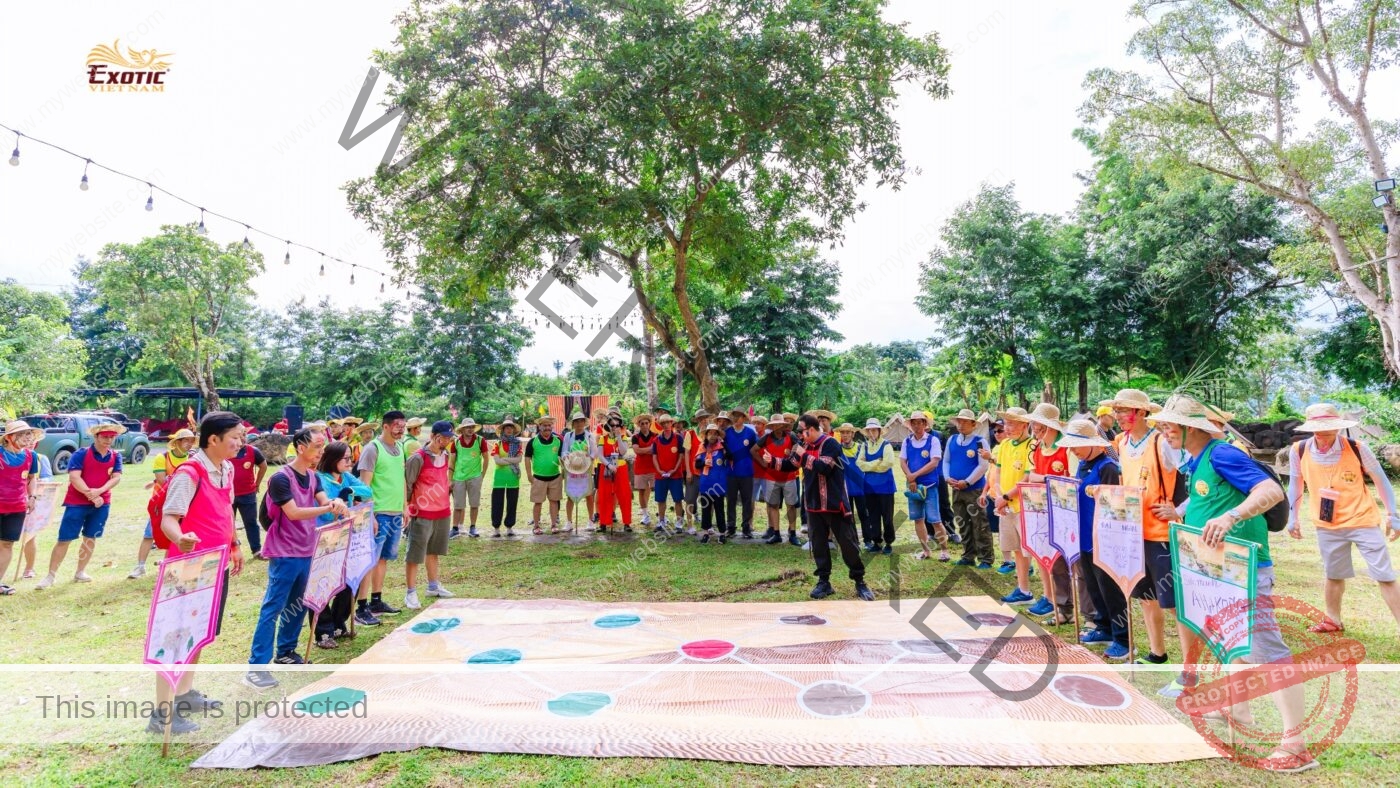
Stronger Collaboration – More Effective Teamwork
An effective team is not simply a group of people working on the same task. Collaboration requires team members to understand the common goal, recognize their individual roles, know when coordination is needed, and be willing to support one another to achieve a shared result. A well-designed challenge is often structured so that no individual can complete the task alone. The team must go through a process: Understand → Coordinate → Support → Execute
From understanding the requirements and agreeing on an approach to allocating roles, coordinating resources, and executing the task, every step can influence the final outcome. If even one team member or one link in the process fails to coordinate effectively, the entire team can be slowed down.
This closely reflects how a business operates. Marketing needs Sales, Sales needs Operations, Operations needs Finance, and all functions must work toward a common goal. Team Building therefore helps teams recognize that the success of an individual or a single department does not necessarily mean the success of the entire organization. What matters is whether all the links in the system can work together effectively to achieve a shared result.

Better Decision-Making – Making Better Decisions
In business, decisions are rarely made under perfect conditions. Information may be incomplete, time may be limited, resources may be constrained, and there are often multiple options with different levels of risk. These are also conditions that Team Building can safely simulate, allowing teams to make decisions, take action, and observe the consequences.
A challenge may place a team in a situation where they must choose between several options without having enough time or resources to test them all. In such situations, what matters is not simply whether the decision is right or wrong, but how the team makes the decision:
- Who provides the information?
- Who asks the questions?
- Who proposes the options?
- Who challenges the ideas?
- Who makes the final decision?
- And ultimately, who takes responsibility for the collective choice?
When the outcome does not meet expectations, does the team continue to defend its initial decision, or is it willing to reconsider? When time is running out, can the team move from discussion to action?
These questions help participants see the relationship between information → decision → action → result in a simulated environment, without having to bear the real-world risks of making mistakes in business.

Problem-Solving & Adaptability – Solving Problems and Adapting
The value of a challenge does not necessarily lie in its physical difficulty. A relatively simple problem, when placed within a setting involving constraints or constantly changing conditions, can sometimes create a much deeper experience.
A team may need to go through a process of: Observe → Analyze → Decide → Act → Adjust
The initial plan may not work as expected, new information may emerge, resources may change, or an approach that initially seems reasonable may lead to an unexpected outcome. The team must then decide whether to continue with the existing approach or pause, learn from the results, and adjust its strategy. This capability is closely aligned with the realities of business, where markets, customers, technology, and business priorities can constantly change. Therefore, the ability to adapt is just as important as the ability to plan.
Team Building can also create a different perspective on failure. A team that “loses” is not necessarily unsuccessful from a learning perspective. If the outcome helps the team identify the causes, recognize weaknesses in the way they operate, and determine what needs to change, then failure can become valuable learning data – and may even provide deeper insights than an easy victory.

Leadership & Ownership – Leadership and a Sense of Ownership
When faced with a shared goal and limited time or resources, the way each team member responds often reveals how the team actually operates. Some take the initiative and assume responsibility, some connect and coordinate, some are strong listeners, some provide support behind the scenes, while others are willing to make decisions when the situation requires it. Therefore, the goal is not to identify “who is the best leader”, but to help the team see how leadership is demonstrated throughout the process of working together.
Who takes the initiative? Who creates opportunities for others to contribute? Who knows how to listen? Who supports their teammates? Who is willing to make decisions? And when the outcome is not successful, who is prepared to take responsibility rather than look for someone to blame?
Here, Ownership adds an important dimension to Leadership. An effective team does not only need people who can lead; it needs members who take ownership of their roles, act proactively, and take responsibility for the collective outcome.
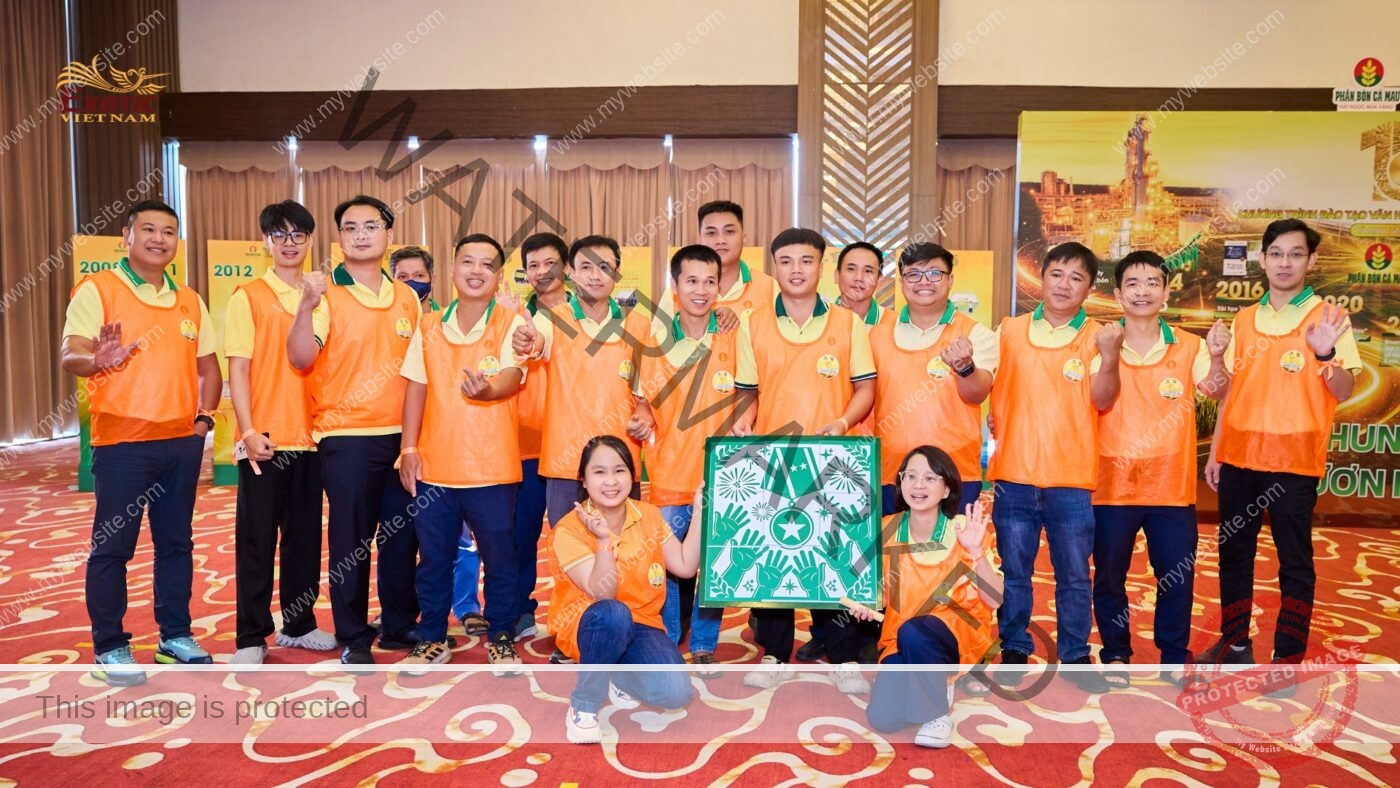
From Experience to Business Value
This is what distinguishes a conventional Team Building program from one designed with a focus on team development. A challenge can create laughter, excitement, and memorable moments. But to create Business Value, the experience needs to be connected to a clear business objective.
The process can be illustrated in four steps: Experience → Reflection → Behavior Change → Business Value
- Experience: The team directly experiences a situation built around a specific objective and challenge.
- Reflection: After the experience, the team reflects on what happened, what worked, and what did not.
- Behavior Change: Participants identify the behaviors they need to maintain or change in the way they communicate, collaborate, make decisions, and take responsibility.
- Business Value: These changes are brought back into the workplace, contributing to better collaboration, stronger execution, and improved ability to achieve business objectives.
Therefore, Business Value does not lie in the game itself. It lies in what participants learn, the behaviors they change, and their ability to transfer those lessons into their work after the program.

Exotic Vietnam – From Team Building Organizer to Team Development Partner
With this approach, the role of a Team Building provider also needs to evolve. It is no longer simply about providing a venue, games, or a “fun and spectacular” program. The provider needs to understand what the business wants to change or strengthen within its team and design the experience around that objective.
Exotic Vietnam approaches Team Building through “Experience – Learning – Development,” with each program designed around the specific objectives, people, and context of the organization. From this perspective, an effective program does not necessarily require highly complex challenges or spectacular formats. What matters more is whether the challenges are relevant to the objectives, appropriate for the participants, and capable of creating opportunities for teams to experience, reflect, and change.
This approach is also reflected in Exotic Vietnam’s programs, from activities focusing on communication, collaboration, problem-solving, decision-making, and leadership to programs that integrate local culture, nature, real-world experiences, and team development objectives.
Therefore, Exotic Vietnam does not view Team Building simply as a corporate event, but aims to be a team development partner – working with businesses to identify objectives, select the right approach, design meaningful experiences, and create opportunities for the lessons from the program to be connected with real-world work.
