


Businesses are increasingly looking for new destinations for their Team Building programs. While Team Building has traditionally been associated with beaches, resorts, open fields, and familiar physical challenges, the new trend is shifting toward local cultural experiences – where participants not only have fun but also discover a destination, learn about a traditional craft, and work together to create meaningful value.
Exotic Vietnam introduces Mang Thit, Vinh Long in the Mekong Delta – a distinctive destination that perfectly reflects this emerging trend.
Mang Thit Brick Village – The “Red Kingdom” of the Mekong Delta
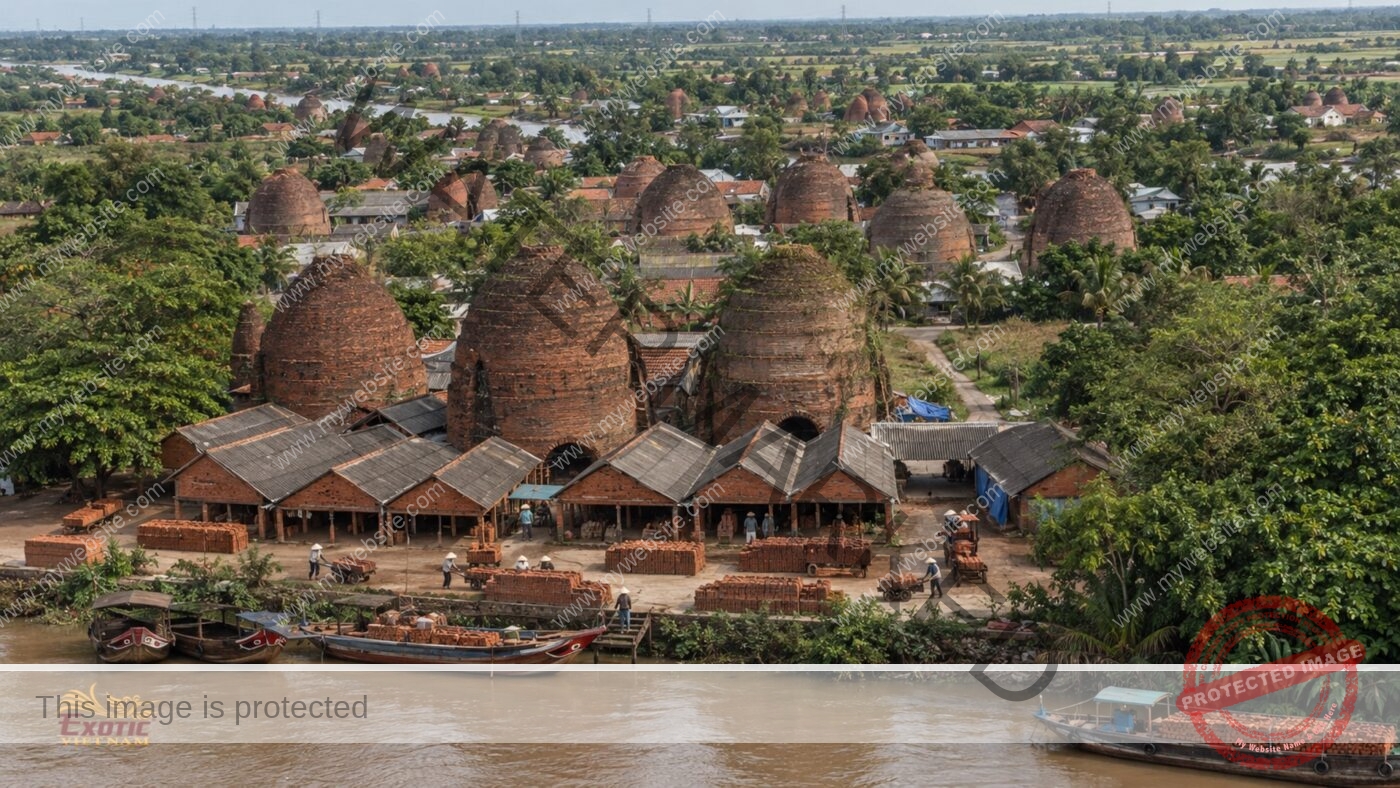
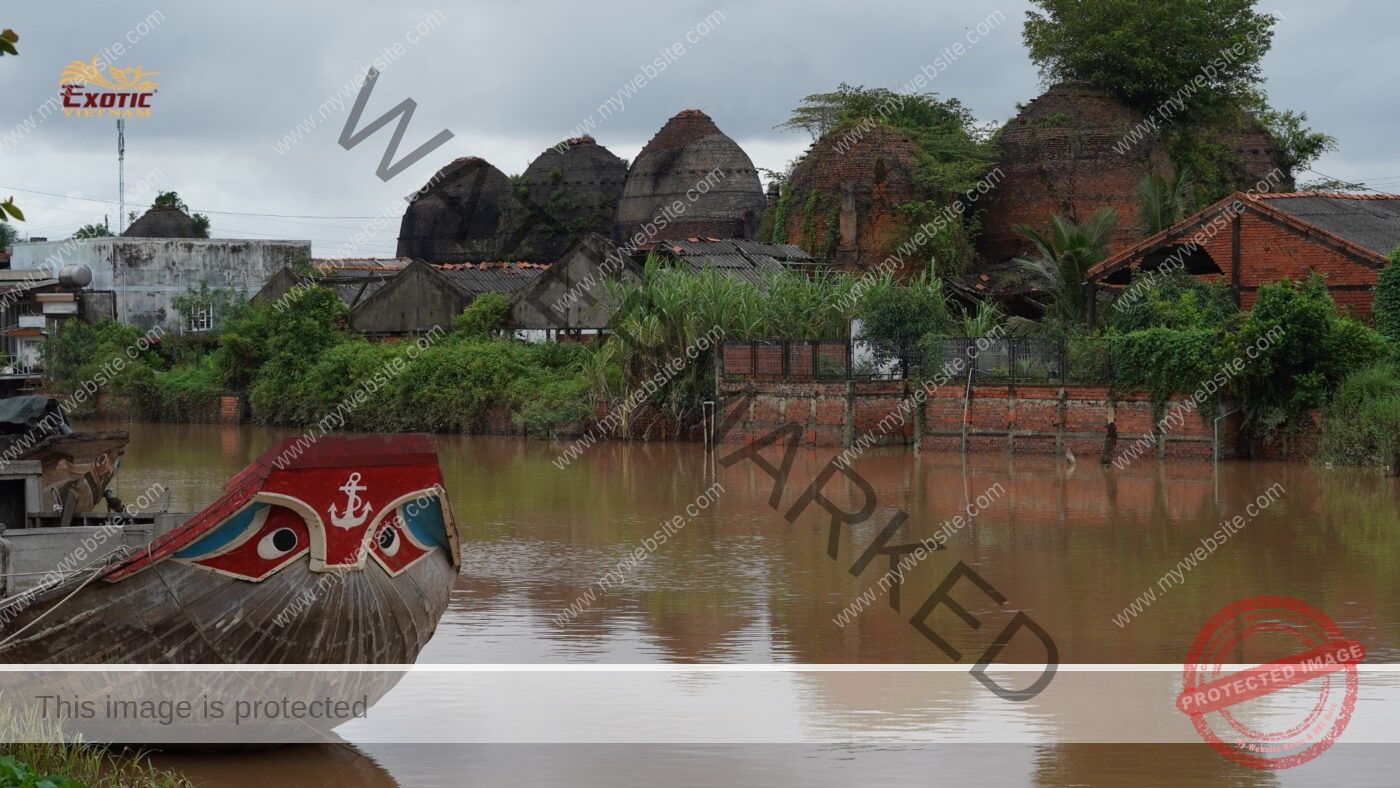
Located about 20 km southeast of Long Chau Ward (formerly the center of Vinh Long City), Mang Thit is a convenient destination for Team Building programs that combine team activities with local cultural experiences. From central Ho Chi Minh City (Saigon Ward), the journey to Mang Thit takes approximately 2.5 hours, with convenient access via the CT01 expressway. Set within the waterways of the Mekong Delta, Mang Thit is renowned for its network of red-brick and ceramic kilns, once known as the “Kingdom of Brick Kilns.” The local brick and ceramic industry has a history of more than 100 years, closely linked to abundant clay resources, a network of rivers and canals that facilitate production and transportation, and the growing demand for construction materials in the region during the country’s period of economic opening.
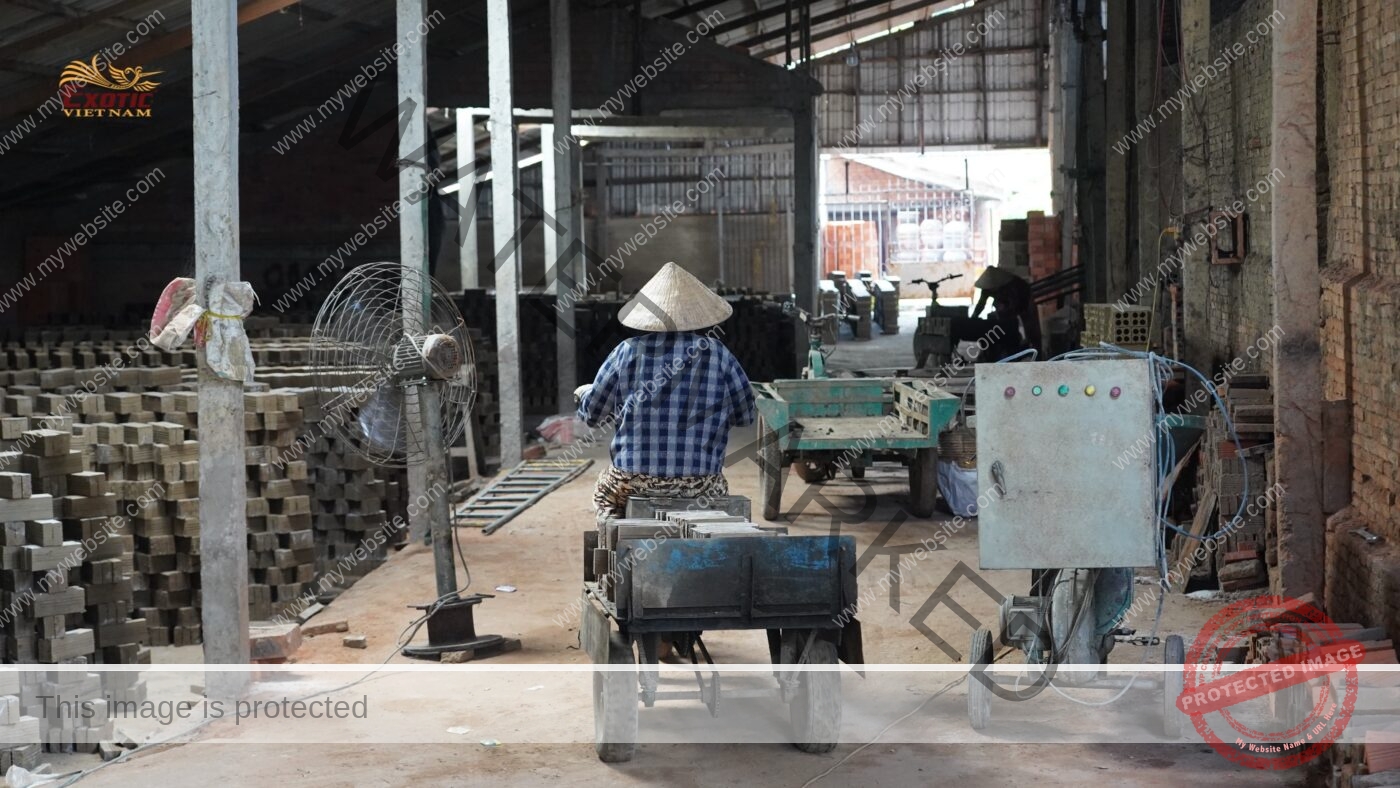
At its peak in the 1990s, Mang Thit had more than 500 operating kilns, creating a distinctive landscape of red-brick kilns stretching along Thay Cai Canal and the surrounding waterways. Behind every brick lies a process that requires the coordination of many people – from preparing the clay, shaping and transporting the bricks, and arranging them inside the kilns to tending the fire and carefully controlling the firing process. It is this combination of earth, fire, water, bricks, and people that has shaped one of the Mekong Delta’s most distinctive traditional craft villages.
Over time, the traditional brick industry has faced increasing challenges from market conditions, production costs, and competition from modern manufacturing methods. Most of the kilns have ceased operation, but the old brick kilns, distinctive red vaulted roofs, and remaining craft-village landscape continue to represent a unique cultural heritage. Vinh Long is now pursuing the “Mang Thit Contemporary Heritage” initiative, with the aim of preserving the brick-kiln system, promoting its cultural and landscape values, safeguarding the traditional craft, and developing tourism, services, and experiential activities.
For businesses, the value of Mang Thit lies not only in its historic brick kilns or the story of a traditional craft village. It also offers an image that closely reflects the spirit of Team Building: a single brick cannot create a structure; its value emerges when each brick is placed in the right position and connected with others. Inspired by the red bricks, vaulted roofs, and kiln structures built from thousands of individual bricks, Mang Thit provides a powerful setting for designing experiences centered on connection, collaboration, and creating a shared achievement together.
Team Building Through Local Cultural Experiences – New Value for Businesses
Team Building is entering a new phase. Businesses are no longer looking only for fun games, physically demanding activities, or eye-catching props. Increasingly, they are focusing on the quality of the experience and the value a program creates for their teams. A successful program should not simply generate laughter for a few hours; it should also help team members connect, understand one another better, and take away a memorable shared experience.
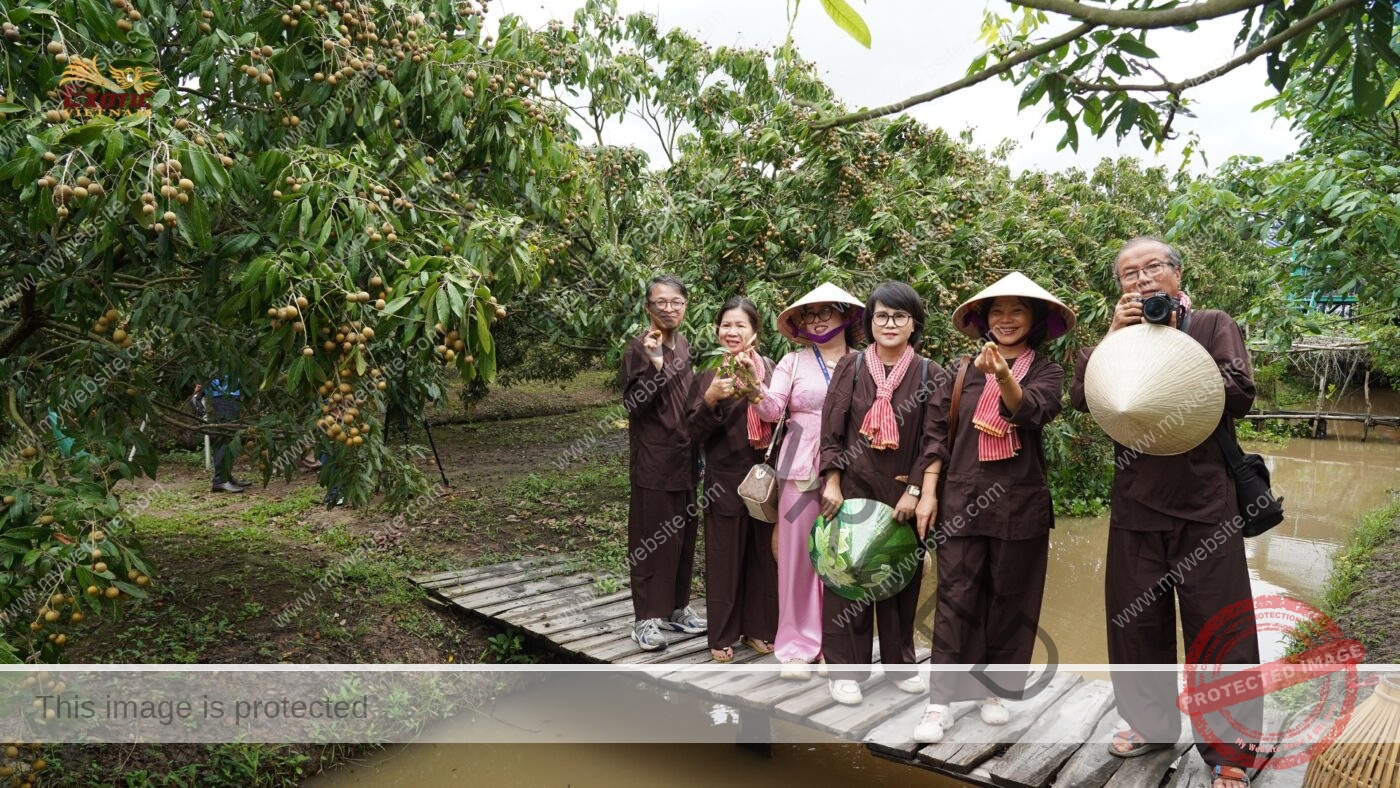
This is why Team Building through local cultural experiences is becoming increasingly appealing. Instead of bringing the same pre-designed script to different destinations, the program is built around the destination itself – its stories, people, traditional crafts, cuisine, landscapes, and culture. Participants do not simply “play at a destination”; they step into the story of the place and turn its local values into an integral part of their Team Building journey.
For Mang Thit, the journey can be designed around four stages: DISCOVER → CONNECT → CREATE → COMPLETE
- DISCOVER – Explore Mang Thit and learn about the story of the brick village, its clay, fire, and traditional craft.
- CONNECT – Work together to solve challenges that require communication, coordination, and mutual support.
- CREATE – Use what the team has discovered to create a product or shared achievement.
- COMPLETE – Bring individual elements together to create a complete outcome, while reflecting on the meaning of the journey.
Based on this structure, each activity can be connected to a specific team value: Communication – expressing ideas and listening; Collaboration – working together to accomplish a task; Creativity – finding solutions using available resources; Adaptability – adjusting when conditions change; and, most importantly, One Team – taking shared responsibility for a common outcome. These values are not delivered through theory; they are experienced directly through action.
Therefore, local culture is no longer simply a “decorative” element of a Team Building program. It becomes the material used to design challenges, create experiences, and communicate the company’s message. In Mang Thit, a brick, a vaulted kiln, a ceramic product, or a local dish can all become the starting point for an activity designed to connect and engage the team.
This is also what distinguishes a Team Building program held at a destination from one that is created from the destination itself. Participants do not simply remember which games they played. They remember how they discovered the destination, what they created together with their teammates, and how they experienced a part of the local culture.
Team Building Program at Mang Thit Brick Village
Inspired by the history and traditional brick and pottery craft of Mang Thit, the program takes participants on an experiential journey in which earth is shaped, water supports the crafting process, fire transforms the raw material, and individual bricks are connected to create a strong structure.
Alongside the journey of discovering the craft village, participants also experience a team development journey: from discovery to connection, from connection to collaboration, and from individual contributions to a shared achievement. Each stage not only explores a distinctive element of Mang Thit’s traditional craft but also represents a factor that contributes to collective strength.
The program is designed as an Amazing Race exploring Mang Thit’s traditional brick-making village. Each team receives a Red Kingdom Map and travels through a series of challenge stations at local homes and distinctive brick kilns, moving either on foot along village paths or by motorboat through canals shaded by nipa palms.
CHALLENGE 1 – EARTH
Local Value
Clay is the fundamental material of Mang Thit’s brick-making tradition. Before becoming a brick, clay must be processed, kneaded, and shaped. This challenge gives participants direct contact with clay – the raw material from which the distinctive bricks and kilns of Mang Thit are created.
Activity
Each team receives a quantity of clay and a model representing a shape or symbol associated with Mang Thit.
The team is divided into two groups:
- Message Team: Observes the model for a specified period and memorizes its shape, dimensions, structure, and details. The team then communicates this information to the Execution Team. Members are not allowed to touch the clay or create the shape themselves.
- Execution Team: Cannot see the original model. Members must listen, ask questions, exchange information, and collaborate based on the instructions received in order to knead the clay and recreate the model.
The team must complete the task within the allotted time. The final product is evaluated based on its similarity to the original model and the team’s ability to coordinate effectively.
Meaning
The challenge recreates a process of transformation – from raw clay into a finished product, mirroring the traditional brick-making process of Mang Thit. From a team perspective, it emphasizes that information only creates value when it is communicated clearly and understood accurately. The Message Team must observe, filter, and articulate information effectively, while the Execution Team must listen, ask questions, and turn information into action.
CHALLENGE 2 – WATER
Local Value
Water is closely connected to daily life and production activities in the Mekong Delta. In Mang Thit, water plays an important role in processing and preparing clay – the primary material used in brick making. The clay needs to be softened, mixed, and brought to the appropriate moisture level before it can be shaped.
Activity
Team members take turns moving from Line A to Line B. At Line B, each participant must transfer water through three containers A, B, and C – according to the rules set by the organizers, with the objective of achieving the required volume of water accurately.
During the task, participants must avoid spilling or losing water. Once completed, the participant returns to Line A, allowing the next team member to continue.
Meaning
In traditional brick making, water helps transform raw clay into a workable material. The challenge therefore simulates a practical task: using the right amount of water to achieve the desired result while minimizing waste.
From a team perspective, the challenge emphasizes precision, coordination, and shared resource management. Each member must perform their role accurately and control the amount of water entrusted to them, because a small mistake during one turn can affect the result of the entire team.
CHALLENGE 3 – FIRE
Local Value
Fire is the element that transforms clay into brick. In traditional brick making, firing is a critical stage that turns shaped clay into a finished product. In Mang Thit, rice husks have traditionally been used as fuel for brick firing, reflecting the production characteristics of the Mekong Delta and the use of locally available agricultural by-products.
Activity
The team is provided with several methods for creating fire, such as wooden sticks, a magnifying glass, a fire starter, and a battery-powered electrical source. The team must choose which method to use. Each method carries a different score, reflecting a different level of challenge.
Once the team successfully creates a flame, it must maintain the fire long enough to burn a specified amount of rice husks. The activity is conducted using controlled equipment, fuel, and a designated area supervised by a Facilitator to ensure safety.
Meaning
Fire represents transformation – from raw materials into something of value. In this challenge, the team must not only create a flame but also choose an appropriate method, sustain its energy, and achieve the required objective.
Having several methods with different scoring levels introduces a strategic decision-making element: the team can choose a safer and easier option or take on a greater challenge in pursuit of a higher score.
CHALLENGE 4 – BRICK
Local Value
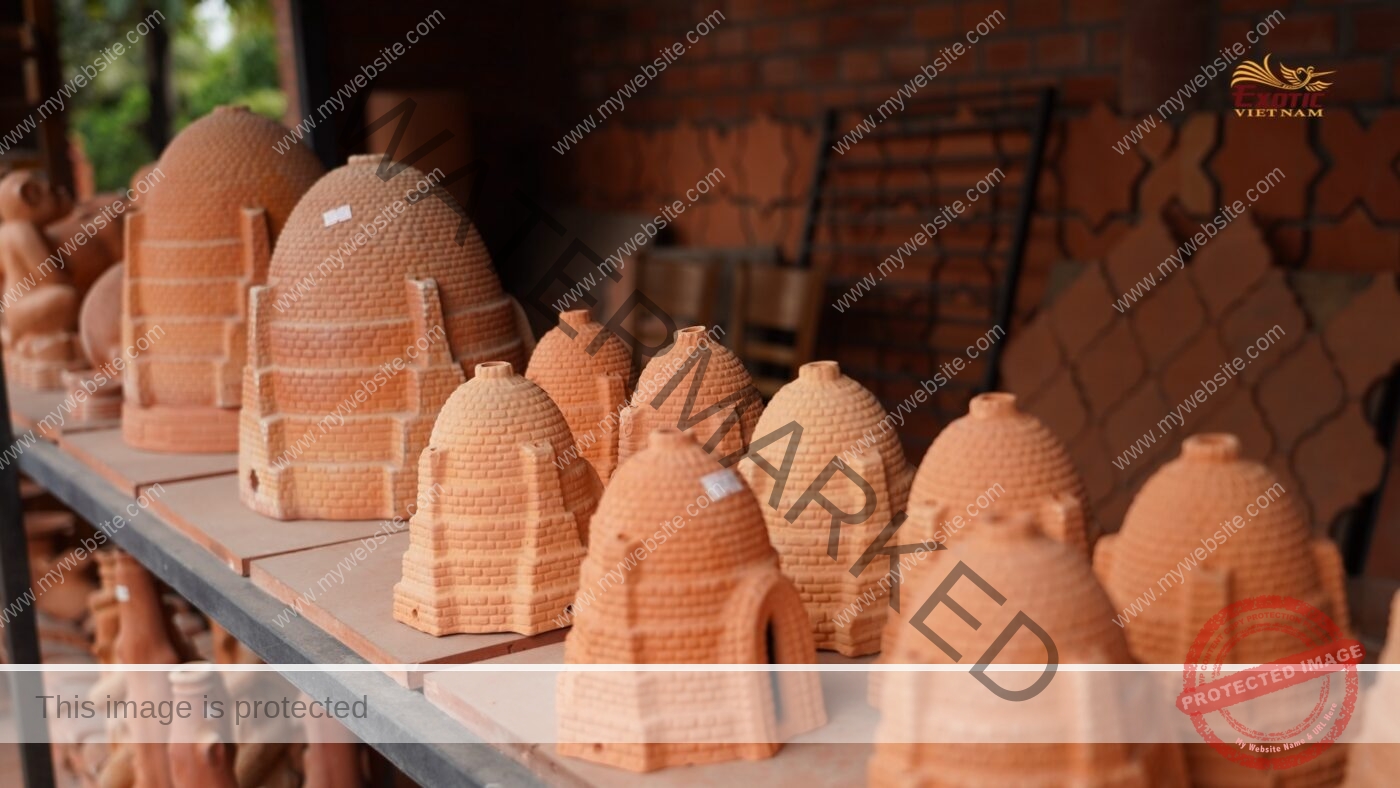
Red brick is the signature product and defining symbol of Mang Thit’s traditional craft village. Using individual bricks, the team must create a complete structure based on the principle of a corbel arch. The bricks are arranged in successive layers, resting against and locking into one another to form a self-supporting structure inspired by the construction techniques used in Mang Thit’s traditional brick kilns.
Activity
Each team receives a set of identical bricks. The objective is to build a self-supporting arch structure that reaches the required height by arranging the bricks in successive steps.
Teams may not use glue, rope, or any other fixing materials.
The structure is considered complete when it:
- Reaches the required height;
- Remains self-supporting for the specified period; and
- Passes the stability test conducted by the Facilitator.
Meaning
A single brick cannot create an arch. Only when individual bricks are positioned correctly, supported, and locked together can they form a stable structure. One misplaced brick can affect the integrity of the entire structure.
Similarly, within a team, every member has a distinct role, and the connections between members determine the strength of the collective. The challenge conveys a simple principle: the value of each individual is fully realized when people connect, support one another, and collaborate toward a common goal.
FINAL ACTIVITY – BUILD AS ONE
After completing the stations, each team has collected symbolic bricks in different colors. However, each brick remains an individual element and cannot yet form a complete structure.
At the final stage, there is no longer any competition between teams. Each team brings its collected bricks to the central area, and all teams work together to complete the structure. Each brick represents an individual contribution, but only when the bricks are connected, positioned, and supported by one another can they become a complete whole.
The final bricks, representing the Management Team, are placed at the center to complete the structure. When the final brick is placed, the entire structure is completed and the final message is revealed: BUILD AS ONE This becomes the symbolic transition from TEAM COMPETITION → TEAM UNITY – from separate competing teams to one collective force moving toward one common goal.
Exotic Vietnam – Your DMC Partner for Team Building in Vietnam
Exotic Vietnam is a Vietnam-based DMC specializing in Team Building, MICE, Incentive Travel, and Corporate Events, with more than 10 years of experience. With a strong understanding of destinations, local communities, traditional crafts, culture, and tourism resources across Vietnam – and particularly in the Mekong Delta – we design programs that go beyond simply bringing a group to a destination and organizing a series of games.
Instead, we explore the local culture, people, landscapes, traditional crafts, cuisine, and distinctive values of each destination and transform them into the foundation for program design. This allows us to create Team Building experiences that are unique to the destination while remaining aligned with the objectives, values, and spirit of each company. For Exotic Vietnam, a destination is not simply a place where a program takes place. It can become an integral part of the Team Building experience – where participants discover the destination, experience its local culture, connect with one another, and create something meaningful together.
This is also what differentiates Exotic Vietnam’s approach to Team Building design. Rather than creating the same temporary playground at every destination, we first explore the story, culture, traditional crafts, nature, cuisine, and everyday life of the local community, then transform these elements into activities, challenges, and teamwork experiences.
Mang Thit is a good example. Earth, water, fire, bricks, traditional craftsmanship, and Southern Vietnamese culture are not simply the backdrop for the program; they become the content of the journey itself. Participants do not simply “play” in Mang Thit. They step into the story of Mang Thit, experience its local heritage, and work together to create their own part of that story.
As a DMC in Vietnam with strong local knowledge and connections, Exotic Vietnam works with both domestic companies and international partners to develop Team Building programs that showcase the distinctive character of Vietnam. From the Mekong Delta to other destinations across the country, we can develop experiences that are closely connected to the destination, culturally meaningful, and designed to create genuine team connection.
If your company is looking for a different kind of Team Building experience – one that is destination-based, culturally authentic, and designed around your team’s objectives – share your goals, group size, dates, destination, and specific requirements with us. Exotic Vietnam can work with you to develop the concept, design the activities, coordinate local resources, and deliver a program that fits your objectives and budget. Let Exotic Vietnam turn a destination in Vietnam into part of your company’s own Team Building story.
