


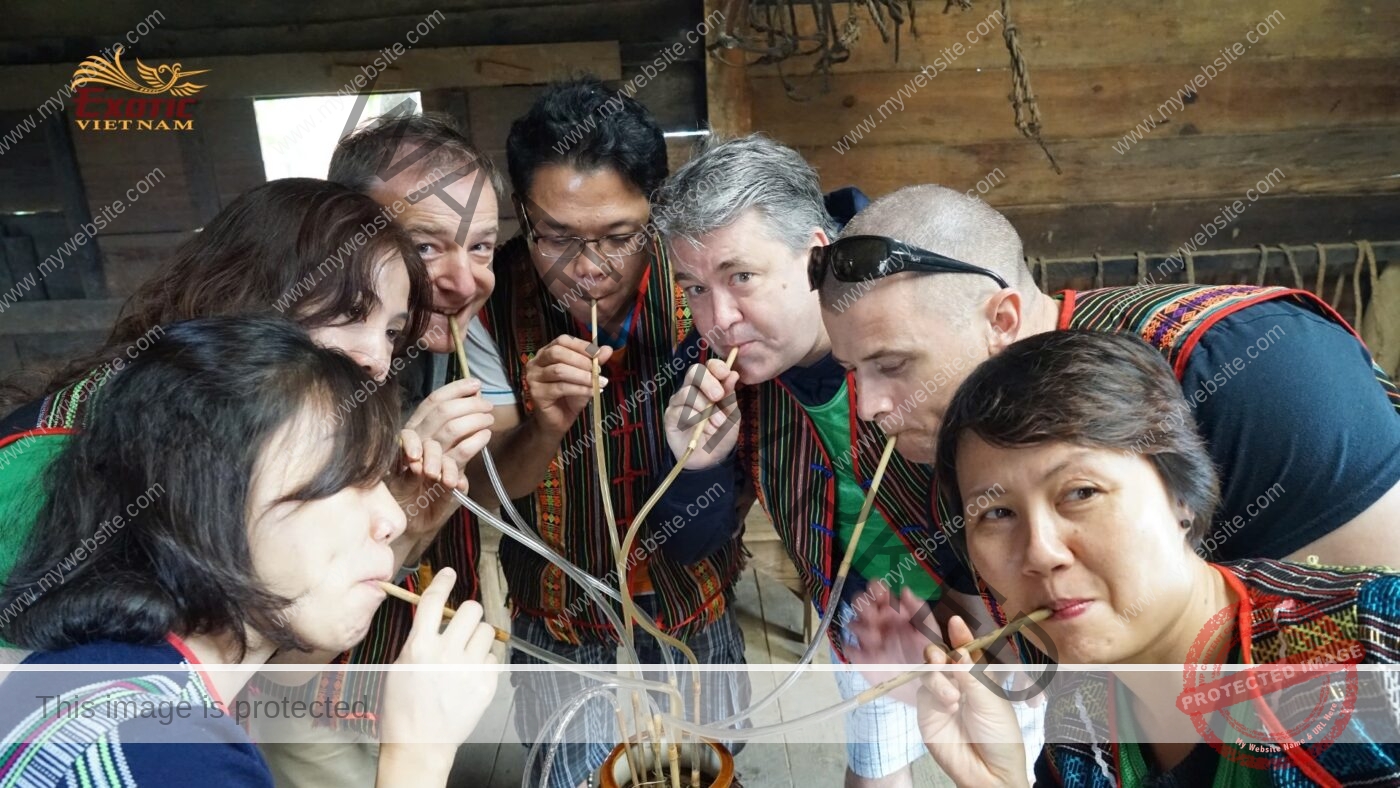
Vietnam is home to 54 ethnic groups, of which the Viet (Kinh) account for nearly 86% of the population, while the remaining 53 ethnic minorities make up about 14%, creating a rich mosaic of cultural diversity and identity. The ethnic communities of Vietnam were shaped through a long process of interaction between two major ancient civilizations – Chinese and Indian – while simultaneously preserving many distinctive indigenous elements. From an anthropological perspective, the Vietnamese are generally considered to originate primarily from the Mongoloid stock, one of the major human groups in the world, widely distributed across North and East Asia.
From a corporate perspective, as culture is no longer seen as a “supporting element” but rather as experiential substance, ethnic cultural journeys designed by Exotic Vietnam in alignment with each organization’s objectives enable participants not only to broaden their understanding of Vietnam’s people and heritage, but also to deepen mutual understanding, strengthen team cohesion, and nurture a shared sense of pride within the organization.
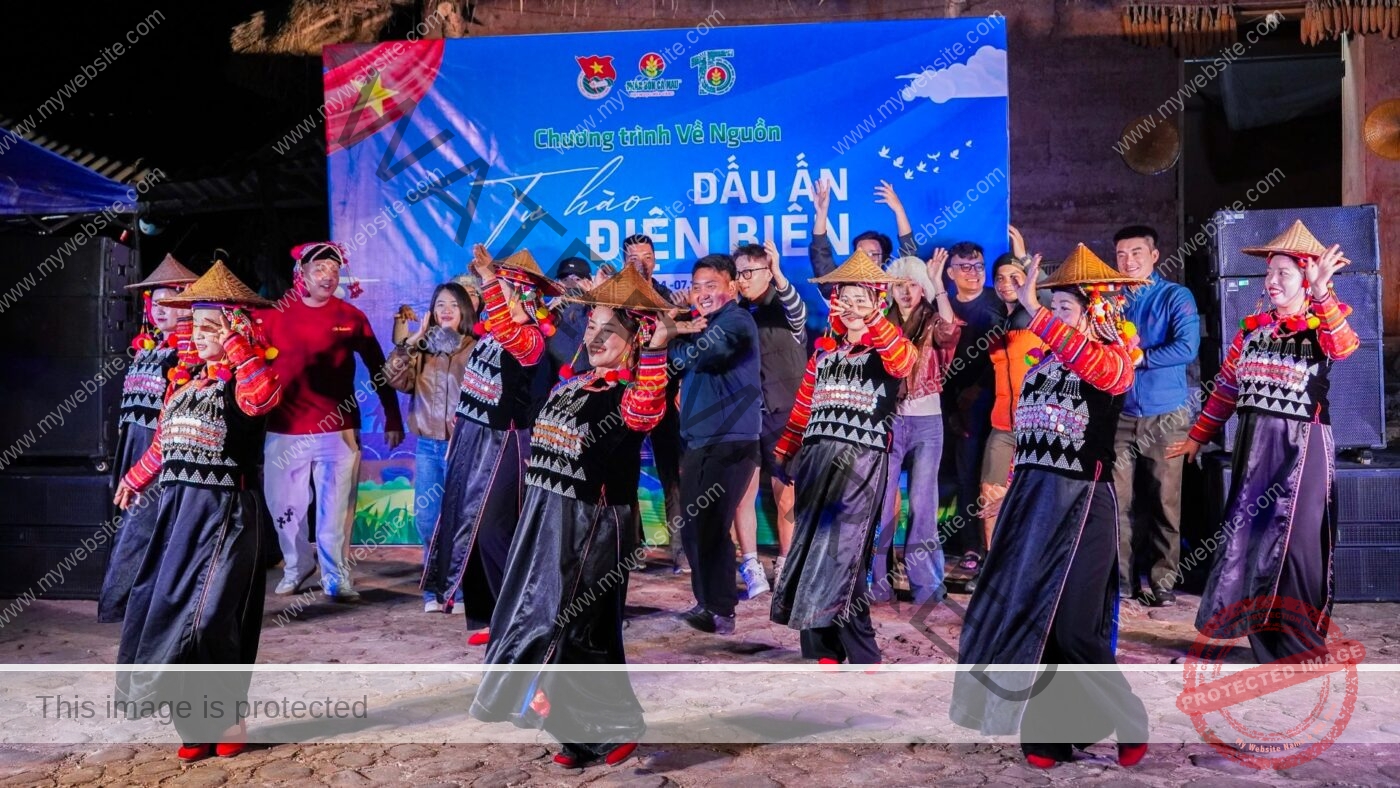
The Relationship Between the Three Major Language Families and the Eight Linguistic Groups in the Classification of Vietnam’s Ethnic Communities
From a cultural–experiential perspective, classifying Vietnam’s ethnic groups by language is not merely an academic exercise; it also serves as a key to helping visitors gain a deeper understanding of the origins, identities, and diversity of the Vietnamese people. The foundation of this classification lies in three major language families: Austro-Asiatic, Austro-Thai, and Sino-Tibetan. From these three root families, Vietnam has further articulated eight principal linguistic groups, which better reflect cultural realities and everyday life, while also providing an ideal framework for designing in-depth ethnic cultural journeys.
At the most fundamental level, the three major language families can be seen as ancient “currents of civilization” across Asia. The Austro-Asiatic family is associated with long-established indigenous populations of mainland Southeast Asia; the Austro-Thai family reflects waves of migration from southern China and island regions into Southeast Asia; while the Sino-Tibetan family embodies historical and cultural influences from the north. However, limiting analysis to these three broad families alone results in a scope that is too general and difficult to connect directly with specific communities within a travel experience.
For this reason, in ethnographic research and cultural management, Vietnam employs eight main linguistic groups as an intermediate level of classification:
- Viet-Muong Group: Viet (Kinh), Muong, Tho, Chut.
- Tay-Thai Group: Tay, Thai, Nung, San Chay (Cao Lan – San Chi), Giay, Lao, Lu, Bo Y.
- Mon-Khmer Group: Khmer (Khom), Ba Na, Xe Dang, Xtieng, Cho Ro, Mnong, Ro Mam, Gie Trieng, Ta Oi, Co Tu, Bru–Van Kieu, Kho Mu, Xinh Mun, O Du, Khang, Mang, Co Ho, Ma, Brau.
- Hmong-Dao Group: Hmong (Mong), Dao, Pa Then.
- Ka Dai (Kadai) Group: Co Lao, La Chi, La Ha, Pu Peo.
- Austronesian Group: Cham, E De, Gia Rai, Ra Glai, Chu Ru.
- Han Group: Hoa (Han Chinese), Ngai, San Diu.
- Tibeto-Burman Group: Ha Nhi, La Hu, Lo Lo, Phu La, Si La, Cong.

Exploring Ethnic Groups within the Austro-Asiatic Language Family
Within the Austro-Asiatic language family, the Viet–Muong and Mon–Khmer groups represent some of the oldest indigenous populations on the territory of present-day Vietnam. The Viet and Muong primarily inhabit the lowlands and midlands, while Mon–Khmer communities such as the Khmer, Ba Na, Xe Dang, Ta Oi, Kho Mu, and Mnong are distributed along the Truong Son Range, across the Central Highlands, and in parts of the northern mountainous regions.
From a tourism perspective, the Austro-Asiatic axis enables the design of journeys that explore the depth of historical layers and indigenous cultures, stretching from north to south. The journey begins with the Viet–Muong group, rooted in the rural landscapes of the Red River Delta and northern villages closely associated with Viet culture. Despite strong pressures from urbanization, many traditional villages around Hanoi remain well preserved, notably Duong Lam Ancient Village with its distinctive laterite houses, or Dao Thuc Water Puppet Village, where the art of traditional water puppetry has been carefully maintained and passed down through generations.
The journey then continues into the mountainous regions of Hoa Binh and Thanh Hoa, the long-established homeland of the Muong people. Here, visitors can stop at Giang Mo Village to explore stilt-house architecture, communal living patterns, and folk rituals associated with mo Muong – a distinctive form of intangible cultural heritage deeply embedded in Muong spiritual life. Within the Viet–Muong group are also several small-population communities with unique cultural value. The Tho people live mainly in the mountainous areas of Thanh Hoa and Nghe An; among them is the Dan Lai community (a branch of the Tho) in Co Phat hamlet, settled along the Giang River amid the vast forests of Pu Mat. They are well known for the unusual custom of “sleeping in a seated position,” a practice closely linked to survival conditions in the deep forest environment. The Chut people, also known through the Ruc subgroup, currently reside in Tan Hoa (Quang Binh). Formerly a semi-nomadic community living in caves, they have been cited in various international studies as one of the world’s most distinctive indigenous groups. Today, they have gradually transitioned to permanent settlement, forming stable villages and opening opportunities for carefully managed and responsible cultural exploration.
Further northwest and along the Truong Son Range are Mon–Khmer communities such as the Kho Mu in Dien Bien, and farther south the Ta Oi, Pa Co, Bru-Van Kieu, and Co Tu living in community-based tourism villages around A Luoi (Hue) and western Quang Tri and Quang Nam. These villages still preserve the zèng weaving tradition with bead embellishment, communal rituals, and characteristic village structures, including A Nor, A Roang, Chenh Venh, and Bho Hoong.
The journey then expands into the Central Highlands, where the gong culture of the Xe Dang, Ba Na, and Mnong peoples is vividly expressed in Ba Na villages around Kon Tum. Here, the resonant sounds of gongs echo beside towering rong communal houses, with Kon Ktu Village on the banks of the Dak Bla River standing out as a representative example. The Austro-Asiatic axis concludes in the Mekong Delta, where Khmer communities are concentrated in Soc Trang and Tra Vinh, distinguished by their network of Khmer pagodas, traditional festivals, and a cultural life shaped by the rhythms of rivers and waterways.
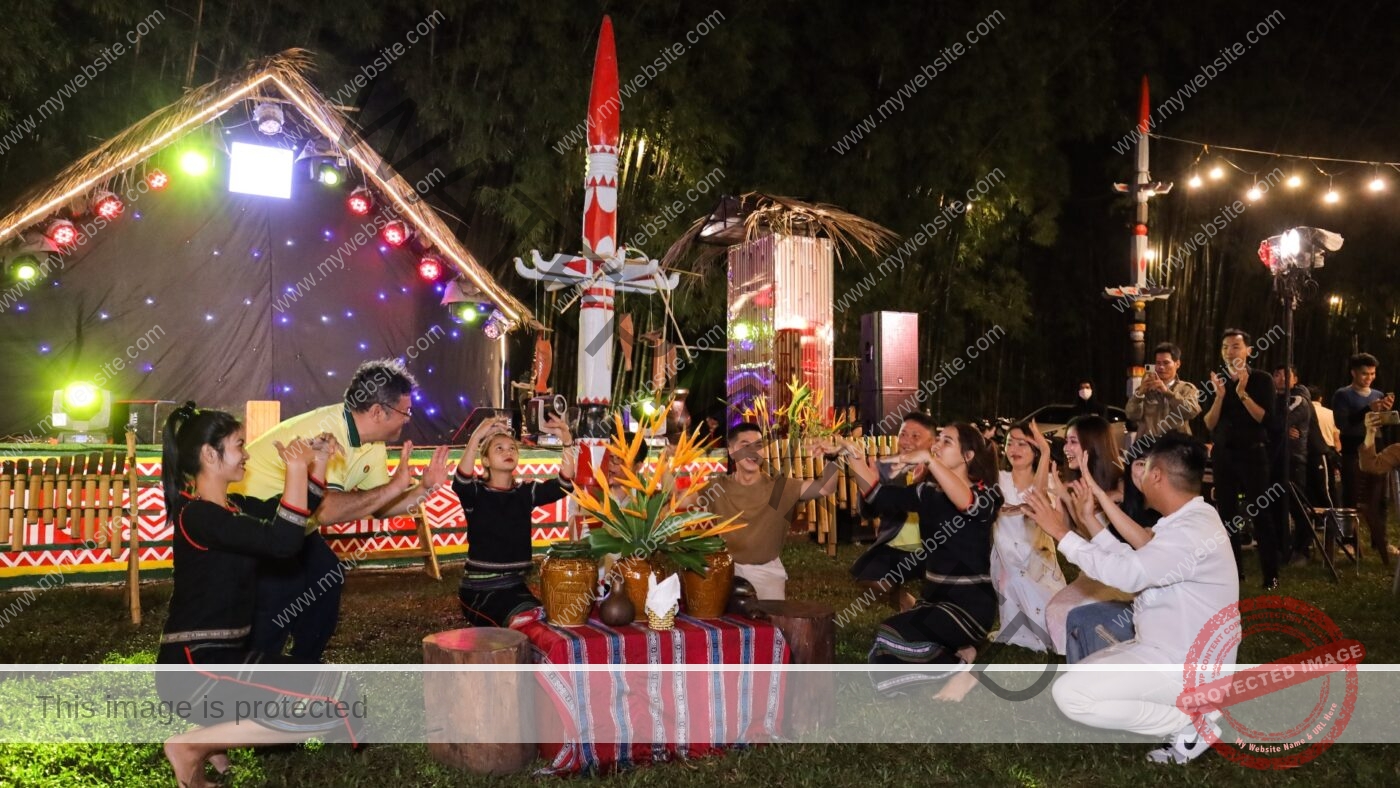
Exploring Ethnic Groups within the Austro-Thai Language Family
The Austro-Thai language family comprises four main linguistic groups – Tay–Thai, Ka Dai, Hmong–Dao, and Austronesian – reflecting a rich diversity of migration histories, settlement patterns, and community lifestyles. This is considered the most culturally diverse language family in Vietnam, shaping the vibrant cultural landscapes of the northern highlands and the central highland plateaus.
Within this family, the Tay and Thai peoples are closely associated with wet-rice valleys, traditional irrigation systems, and low stilt houses built along streams – hallmarks of early settled agriculture in the uplands. A representative example is the Thai village of Hoa Tien in Quy Chau – Nghe An, where many traditional farming practices are still maintained, including water-wheel irrigation, sericulture, and silk weaving. Similarly, Thai Hai Tay Village in Thai Nguyen Province stands out as a model community-based tourism destination, where stilt-house architecture, communal life, and traditional cultural values are sustainably preserved and promoted.
The Hmong and Dao peoples mainly inhabit high mountain slopes, where they are closely connected to upland markets, vibrant embroidered costumes, and rich systems of rituals and beliefs. These elements contribute some of the most striking cultural expressions of northern Vietnam’s mountain regions. The Hmong are divided into several cultural and costume-based subgroups, such as the Black Hmong (Sa Pa–Lai Chau), Flower Hmong (Bac Ha–Ha Giang), White Hmong (Dien Bien–Son La), and Red Hmong (with some communities in Ha Giang). The Dao also comprise many distinctive local groups, including the Red Dao (Lao Cai, Ha Giang), Dao Quan Chet (Vinh Phuc, Tuyen Quang), Dao Thanh Y (Quang Ninh), Dao Dau Bang, and Dao Tien (Hoa Binh, Son La, Cao Bang), each with its own variations in dress, life-cycle rituals, and communal practices.
Along this journey, Sin Suoi Ho Village in Lai Chau serves as a representative stop for experiencing Hmong culture, noted for its dramatic mountain scenery, strong community cohesion, and well-preserved community-based tourism model. Further on is My Bac Village (Tan Bac, Tuyen Quang), where visitors can explore the culture of the Pa Then people. Despite their small population, the Pa Then leave a powerful impression through the unique Fire Jumping Ritual, which reflects a spiritual worldview centered on fire, deities, and collective inner strength, adding a distinctive dimension to the cultural tapestry of the northern highlands.
Meanwhile, the Austronesian groups – E De, Gia Rai, Cham, and Ra Glai – offer a markedly different cultural landscape. While the E De and Gia Rai are known for their longhouses, matrilineal social structures, Central Highlands gong culture, tomb statues, and rituals associated with life and death cycles – exemplified by villages such as Plei Kep of the Gia Rai in Pleiku or A Co Thon of the E De in Buon Ma Thuot – the Cham and Ra Glai preserve a distinctive coastal–mountain cultural identity. This is expressed through Cham tower architecture, Brahmanism and Islam, as well as agricultural rituals, music, and indigenous knowledge closely connected to the natural environment of South Central Vietnam. Notable Cham craft villages include Bau Truc Pottery Village and My Nghiep Weaving Village in Phan Rang. Further south in the Mekong Delta, Chau Giang Cham Village in Chau Doc is renowned for its traditional weaving and Islamic mosques.
From a tourism perspective, the Austro-Thai axis enables the design of experiential journeys centered on ecology and lifestyle, linking terraced fields and upland villages of the rugged northern mountains, through ethnic communities shaped by periodic markets and traditional festivals, to the open plateaus of the Central Highlands and the lower Mekong region – where gong culture, longhouses, religious practices, and communal life continue to thrive in vivid and living forms.

Exploring Ethnic Groups within the Sino-Tibetan Language Family
The Sino-Tibetan language family is represented in Vietnam by two main groups: Han and Tibeto–Burman, distributed primarily across the northern mountainous regions of the country. Communities such as the Hoa (Chinese), Ha Nhi, Lo Lo, and La Hu embody a strong frontier cultural character, reflecting centuries of interaction within the broader Vietnam–China–Himalayan cultural sphere. This cultural context provides an ideal foundation for designing journeys focused on highland exploration, traditional festivals, and borderland heritage.
Along this route, visitors may travel to the Lung Cu Flagpole, the nation’s sacred northernmost landmark, combined with a visit to Lo Lo Chai Village, a representative settlement of the Black Lo Lo people. The village is distinguished by its rammed-earth houses, traditional costumes, and well-preserved community life. Recently, it was recognized by UN Tourism as one of the Best Tourism Villages of 2025, making it a standout example of highland community-based tourism.
The journey then continues to A Pa Chai in Dien Bien – often described as the place “where one rooster’s crow can be heard in three countries”. Here, travelers have the opportunity to explore the culture of the Ha Nhi people, particularly through traditional rituals and festivals such as Ho Su Cha New Year and the Kho Gia Gia Festival, which express local perceptions of agricultural cycles, communal spirit, and the harmonious relationship between people and the natural environment of the borderlands.
A further highlight is Bum To Commune in Muong Te – Lai Chau, regarded as the “capital of the La Hu people” in Vietnam. Comprising eight villages with a population of over 3,000 – approximately one third of the country’s total La Hu population – this area offers a distinctive setting for discovering traces of former swidden-based and semi-nomadic lifestyles, along with the music, costumes, and traditional customs of one of the most representative communities within the Tibeto–Burman group.
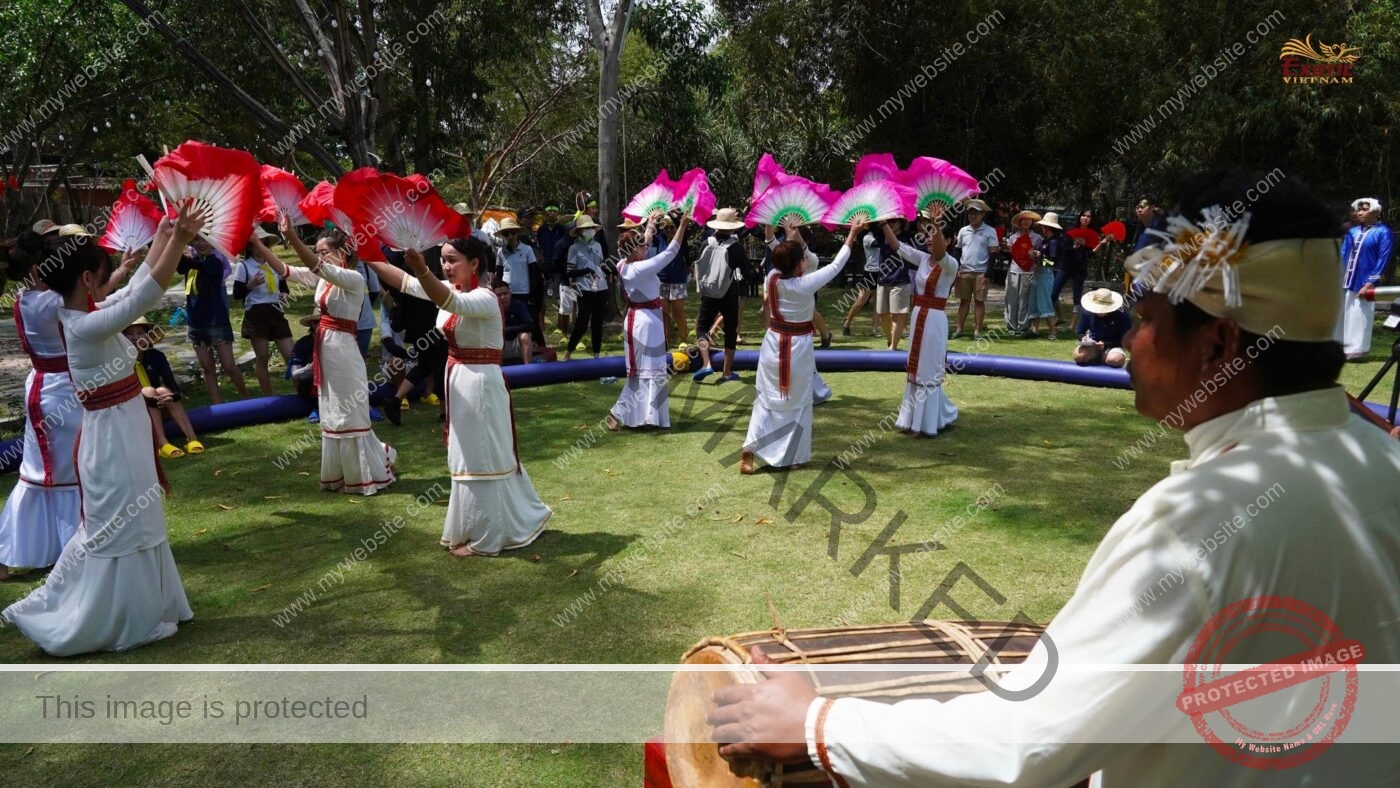
Exotic Vietnam – Partnering with Enterprises to Explore Vietnam’s Ethnic Diversity
The three major language families form the deep historical foundation of Vietnam, while the eight principal linguistic groups serve as a “cultural map” that reflects the rich diversity of the country’s ethnic communities. When this framework is applied to ethnic cultural journeys designed for corporate groups, the experience goes far beyond sightseeing to become a meaningful voyage of connection, inspiration, and appreciation – well aligned with the objectives of incentive programs, retreats, and immersive cultural learning.
Within this journey, Exotic Vietnam acts as both designer and strategic partner for corporate clients, transforming cultural, linguistic, and community values into experiences with depth and purpose. From the Viet–Muong landscapes of northern midlands, to Tay-Thai villages in rice-growing valleys, Hmong–Dao market cultures on high mountain slopes, the gong-filled spaces of the Central Highlands, and the frontier character of Sino-Tibetan communities, each destination is carefully selected and connected in the spirit of collective learning, mutual respect, and strengthened team cohesion.
With extensive experience in delivering MICE and incentive travel, Exotic Vietnam places strong emphasis on integrating community exchanges, cultural workshops, team-based activities, and moments of quiet reflection. These elements enable participants not only to “travel together,” but to understand one another more deeply – thereby reinforcing team spirit and corporate identity. This harmonious fusion of cultural depth and business objectives is what creates truly distinctive journeys, where Vietnam’s ethnic heritage becomes a sustainable source of inspiration for organizations.
