


Vietnam’s territory encompasses two border tripoints of exceptional geographical, political, and national defense significance. The first is the Indochina Tripoint, where Vietnam, Laos, and Cambodia converge, located in Bờ Y Commune, Quảng Ngãi Province (formerly Ngọc Hồi District, Kon Tum Province). The second is the Vietnam–Laos–China border tripoint at A Pa Chải, in Sín Thầu Commune, Điện Biên Province (formerly Sín Thầu Commune, Mường Nhé District, Điện Biên Province) – the sacred westernmost point of the nation.

A Pa Chải – The Landmark at Vietnam’s Westernmost Point
Located at 22°24′02.58″ N, 102°08′38.06″ E in DMS format, A Pa Chải can be easily identified on Google Earth. These coordinates mark the summit of Khoang La San Mountain, rising to an elevation of 1,866 meters – one of the most remote mountainous locations in Vietnam’s Northwestern region. This is where Milestone No. 0 stands, marking the border tripoint and delineating the territorial boundaries of Vietnam, Laos, and China.
Milestone No. 0 was jointly established by the three countries on June 27, 2005. Crafted from granite, the marker takes the form of a 2-meter-high triangular prism, set on a hexagonal base and surrounded by a square platform measuring 5 meters on each side. Each of its three faces bears the national emblem and official inscription of one country, oriented toward the respective territory it represents. Beyond its legal significance, Milestone No. 0 stands as a sacred symbol of national sovereignty and territorial integrity.

The Journey to the Sacred Borderland
From Điện Biên Phủ, travelers follow National Route 12 northward to Na Sang (a newly designated locality, formerly Mường Chà Town), covering a distance of approximately 53 km. From there, the route turns west onto National Route 4H, passing through Mường Chà, Chà Cang, and Mường Nhé, with a total distance of about 195 km to reach A Pa Chải. When approaching from Sa Pa, the journey follows National Route 4D westward, crossing a series of mountain passes – Trạm Tôn, Giang Ma, and Hồng Thu Mán – to Pa Tần (approximately 125 km), before continuing along National Route 4H through Bum Tở, Pắc Ma, Mù Cả, and Phìn Khò, covering an additional distance of about 210 km to reach A Pa Chải. The final stretch from A Pa Chải Border Guard Station to Milestone No. 0 is approximately 11 km long.
Thanks to significant improvements in transport infrastructure, the entire route is now accessible by 29-seat vehicles. Vehicles can reach the slopes of Khoang La San Mountain, near the Flagpole area; it is expected that by the end of the first quarter of 2026, the road will extend to the base of the 519-step staircase leading on foot to Milestone No. 0.
To ascend the mountain and access Milestone No. 0, all official delegations and visitors must obtain prior permission and be accompanied by officers and soldiers from Border Guard Station 317. Strict compliance with border management and protection regulations not only ensures safety but also reflects respect for and commitment to safeguarding national sovereignty.
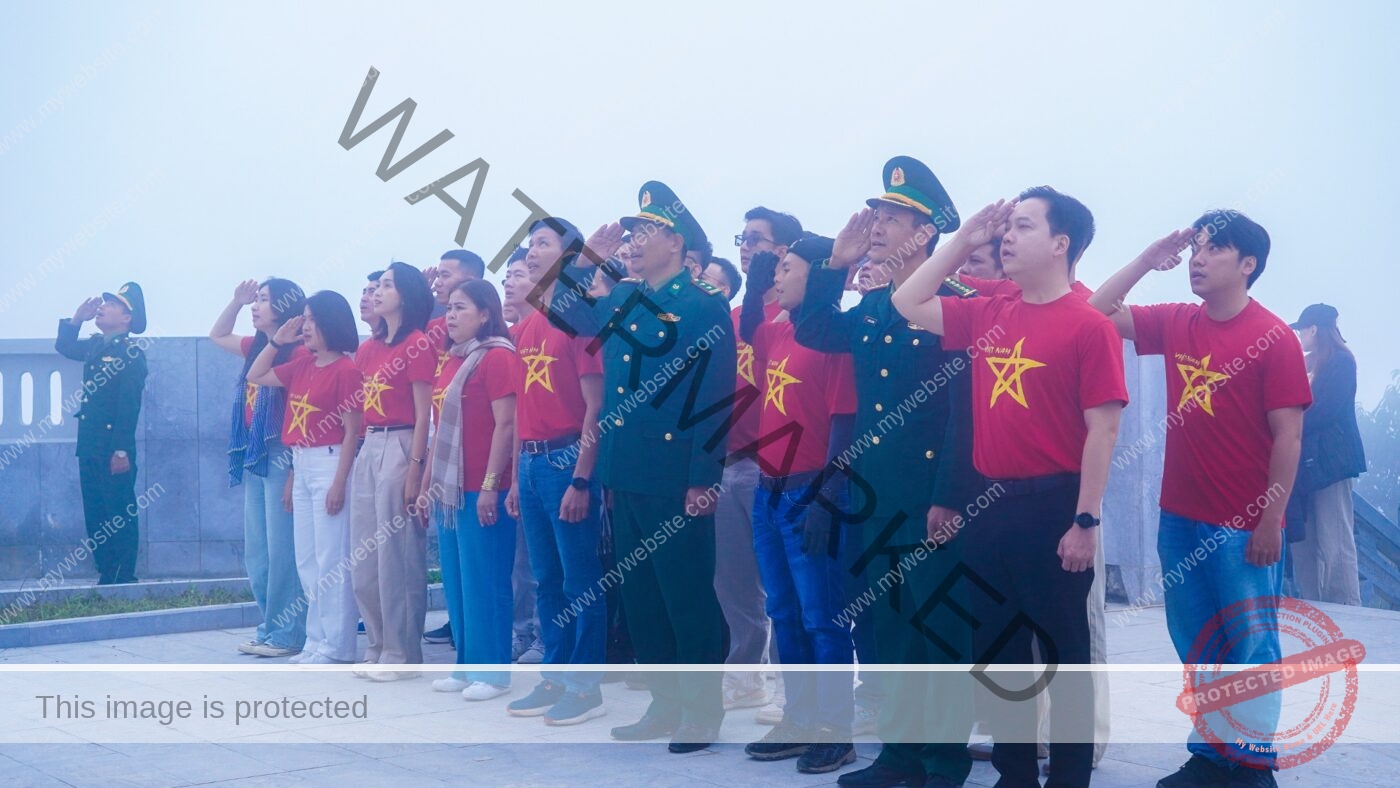
Safeguarding Sovereignty in Connection with Border Security and Local Livelihoods
Located at the tripoint of the Vietnam–Laos–China border, A Pa Chải holds a strategic position in safeguarding national sovereignty and ensuring security along Vietnam’s northwestern frontier. The area involves various complex factors related to security, public order, and cross-border activities, requiring the constant presence and high level of vigilance of the relevant authorities. Under all circumstances, the Border Guard forces remain the core force, maintaining a continuous on-site deployment, conducting day-and-night patrols, monitoring border lines and markers, and promptly addressing any emerging situations.
Alongside its role in border protection, A Pa Chải is also the long-established homeland of more than 350 households of the Hà Nhì ethnic group, living across 11 villages in the two border communes of Sín Thầu and Sen Thương. In recent years, together with local authorities and various sectors, the Border Guard forces have actively contributed to socio-economic development, poverty reduction, population stabilization, and the gradual improvement of living standards for border communities.
The establishment of the A Pa Chải–Longfu border crossing, connecting with Jiangcheng County in Yunnan, China, has facilitated cross-border exchanges, trade, and family visits for residents on both sides. This has contributed to local economic development while strengthening relations of friendship, peace, and cooperation. Within this broader context, the image of soldiers in green uniforms traversing forests and mountains, quietly safeguarding each border marker deep in the wilderness, continues to serve as a vivid symbol of responsibility, sacrifice, and unwavering loyalty to the nation.
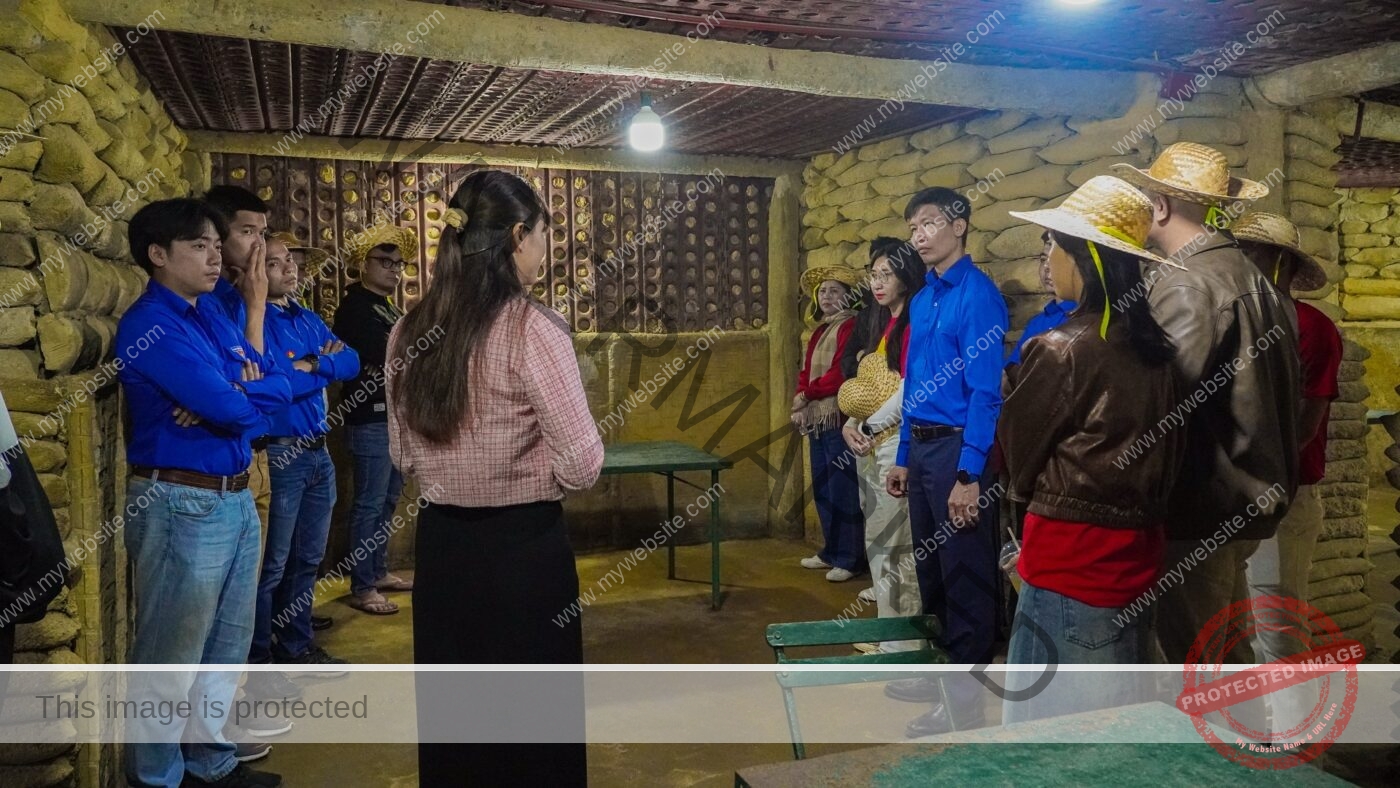
Tourism Development in A Pa Chải – Potential and Strategic Direction
Alongside improvements in infrastructure and social conditions, A Pa Chải has in recent years emerged as an appealing destination for travelers interested in experiential travel, exploration, and learning about national sovereignty. Tourism development in A Pa Chải is not mass-oriented; instead, it focuses primarily on heritage-oriented journeys, experiential travel, community-based tourism, and tourism associated with patriotic education.
Visitors to A Pa Chải not only have the opportunity to admire the majestic beauty of pristine forests and layers of mist-shrouded mountains at the westernmost point of Vietnam, but also to witness firsthand the sacred border marker, gain insights into the distinctive cultural life of the Hà Nhì people, and better understand the role of the Border Guard forces in safeguarding national sovereignty. However, to date, foreign visitors are not permitted to travel to A Pa Chải, as it is a border area of particular importance to national defense and security, bordering both Laos and China. Strict control over access is maintained to ensure security and public order, protect territorial sovereignty, and preserve the stability of local communities, as well as the effective management of border areas by the relevant authorities.
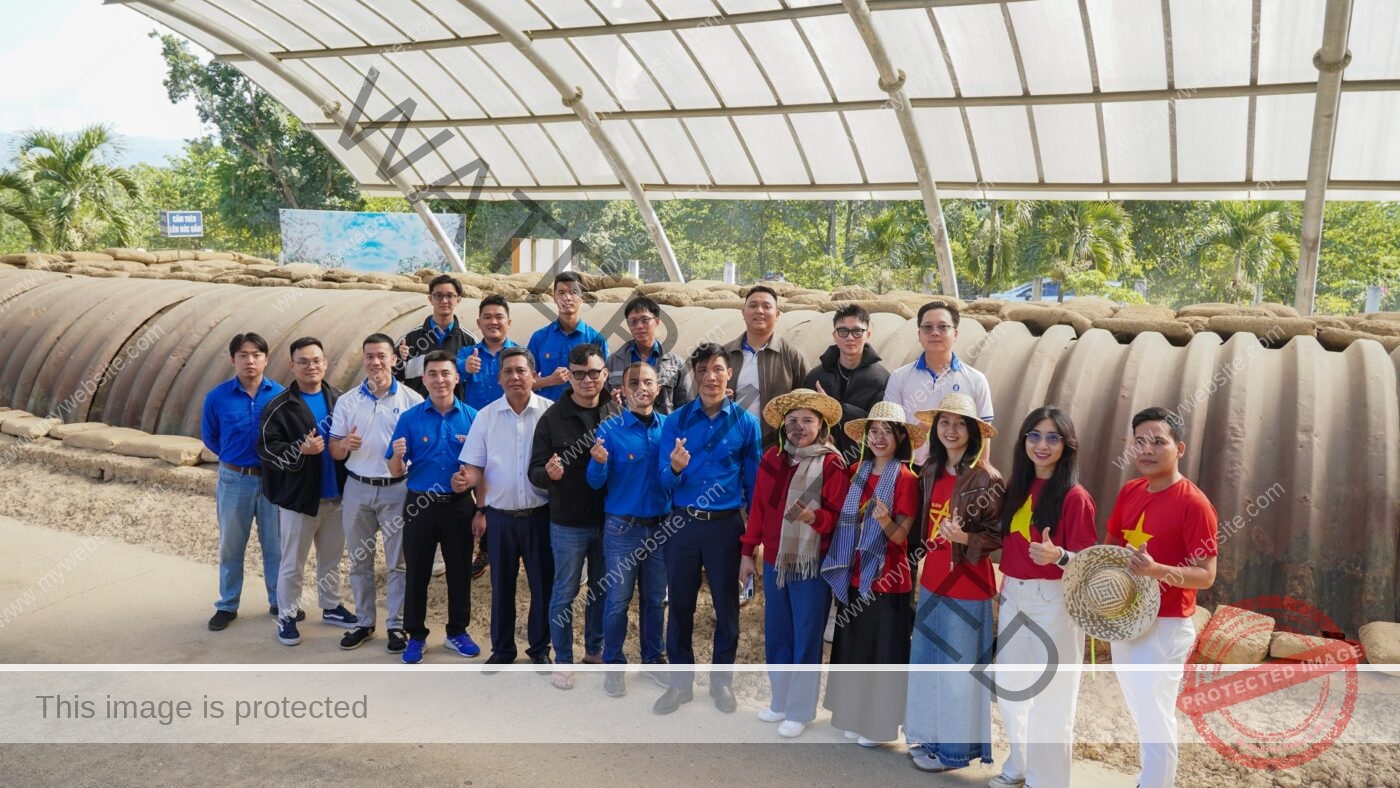
The Role of Exotic Vietnam in Border Tourism Development
In the process of connecting and promoting the image of A Pa Chải, travel companies play an important bridging role between visitors and this remote borderland. Among them, Exotic Vietnam is one of the pioneering operators in organizing exploration and experiential travel programs to remote, off-the-beaten-path, and border regions, including journeys to A Pa Chải.
By designing well-structured travel programs that strictly comply with border management regulations, Exotic Vietnam has helped bring visitors to A Pa Chải in a safe, responsible, and well-guided manner. These journeys go beyond the simple goal of reaching Vietnam’s westernmost point, incorporating meaningful content such as learning about the history of border markers, exploring local cultural life, and understanding the sacred significance of national sovereignty.
Tourism development in A Pa Chải must always be closely aligned with national defense and security objectives. When properly managed and responsibly organized, tourism not only contributes to the socio-economic development of border regions but also serves as an effective channel for communication, helping to foster love for the homeland, strengthen national pride, and raise community awareness of the shared responsibility to safeguard national sovereignty.
