


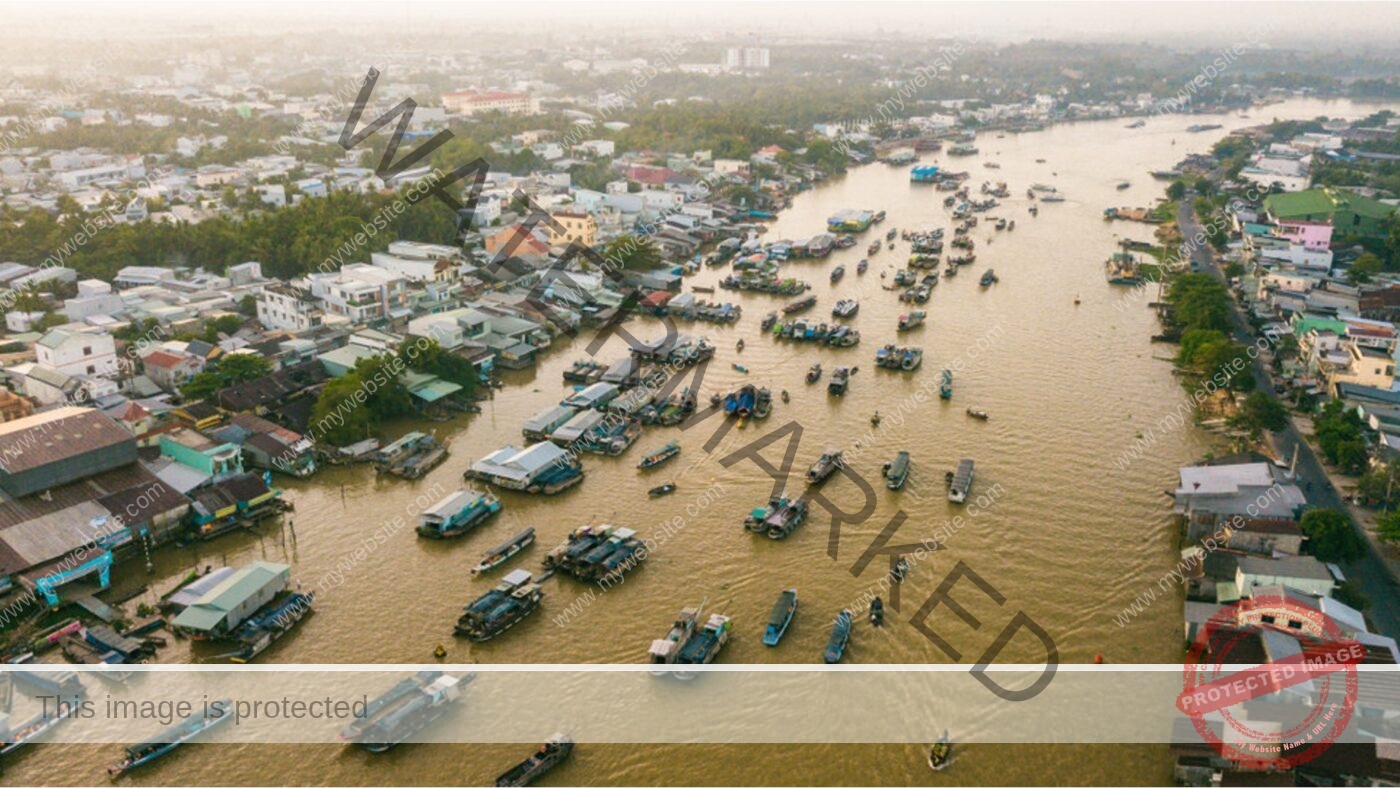
The Mekong Delta is a unique ecological and cultural landscape, shaped over thousands of years by the gradual accumulation of alluvium and the flow of the Mekong River. Unlike river deltas that rely on dikes and rigid flood-control systems, southern Vietnam has evolved through a different philosophy: living in harmony with nature rather than opposing it. This “thuận thiên” mindset (adapting to natural forces instead of trying to dominate them) has given rise to a distinctive civilization – the riverine civilization of the Mekong Delta.
The entire delta is the product of an immense network of rivers, canals, creeks, wetlands, and floodplains created by the Mekong system. This landscape is structured around three major ecosystems: coastal mangrove zones, inland acid-sulfate lowlands, and the fertile alluvial belts along the Mekong and Bassac Rivers. Water here is in constant flux – sometimes salty, sometimes fresh; sometimes flooded, sometimes dry. Rather than attempting to control these fluctuations, local communities have learned to adapt to them and turn them into sources of life and productivity.
People of the Mekong Delta do not regard floods as disasters; they call them the “flood season.” When the waters arrive, they deposit fertile silt, flush away salinity and acidity, and fill the fields with fish and shrimp, revitalizing the entire ecosystem. From this seasonal cycle emerged a distinctive form of water-based agriculture, featuring cá linh (a small migratory river fish that appears only during the flood season), edible wild flowers such as bông điên điển (a yellow blossom that grows in flooded fields and is a seasonal Mekong delicacy), floating rice, and flood-season aquaculture. Daily life, cuisine, and cultural practices all follow the rhythm of these waters.
Within this environment, Vietnamese, Khmer, and Chinese communities have lived, cultivated the land, and traded together for centuries, forming a multicultural society deeply shaped by the rivers. Here, the river is far more than a natural feature – it is living infrastructure: a transportation network, a marketplace, a social space, and a source of livelihood. From this way of life, floating markets naturally emerged, becoming the organic expression of a civilization that lives in harmony with water.
Cai Rang Floating Market – A Cultural Icon of the Riverine World
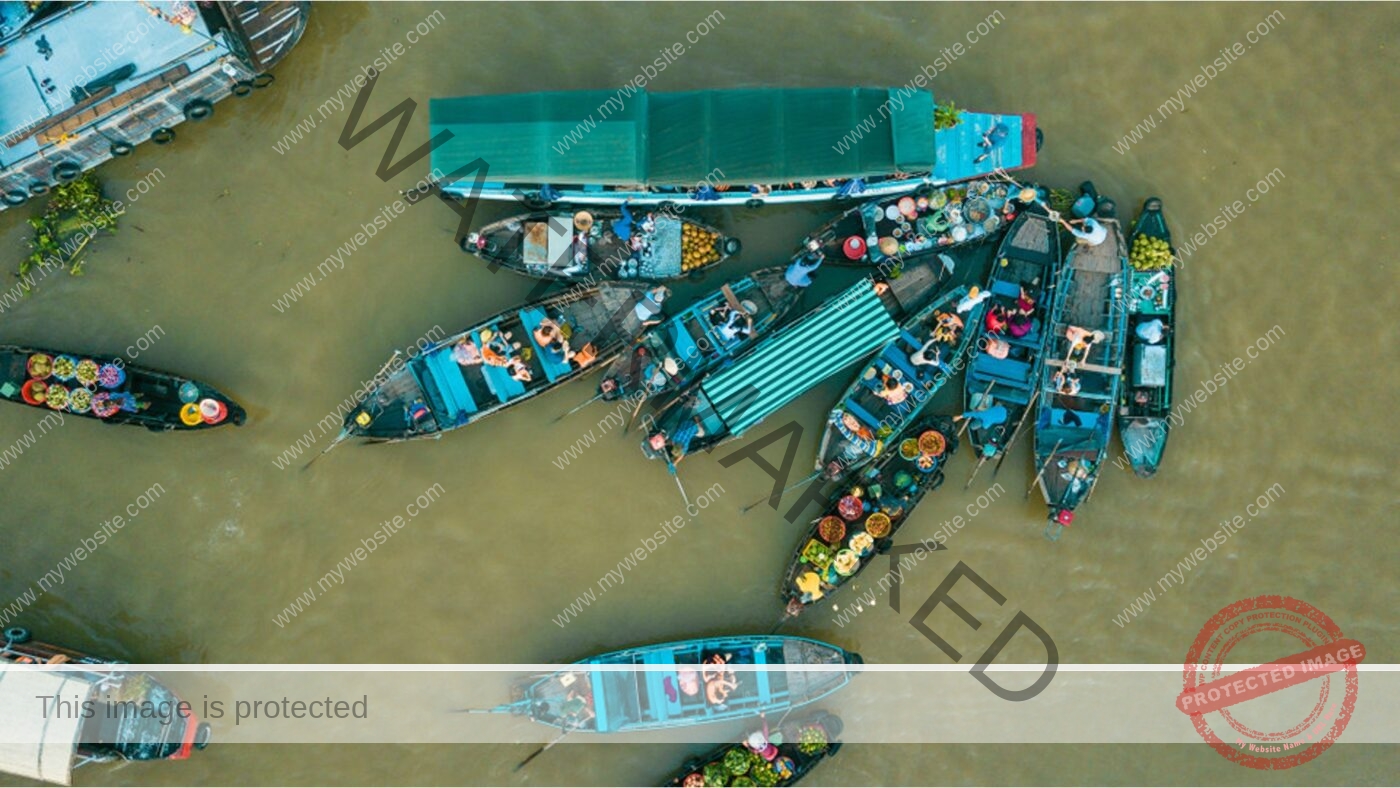
Cai Rang Floating Market is far more than a place of trade. It is a living cultural space where river merchants, agricultural produce, language, customs, and the communal spirit of the Mekong Delta converge.
Since the early 20th century, when trading boats began gathering along this stretch of river, Cai Rang has served as a key link between the orchard hinterlands and the city of Can Tho. Over time, a complex commercial ecosystem took shape: large boats acting as wholesalers, smaller boats selling directly to customers, boats serving food, service boats, and tourist boats – all coexisting on the same water surface.
The soul of the floating market lies in the cây bẹo – a tall bamboo pole erected at the bow of each boat to display the goods being sold. In the vast and noisy river environment, the cây bẹo functions as a visual language of the river traders: what you hang is what you sell. This simple yet remarkably effective method of advertising has become one of the most distinctive cultural symbols of the floating market.
From these poles, one can read the rhythm of life: which fruits are in season, which boats sell wholesale, which sell retail, who are traders and who are orchard farmers. There are even touching exceptions – such as hanging a coconut leaf to signal that the entire boat itself is for sale, a way of offering one’s own “floating home” to a new owner.
The market comes alive from midnight until morning, reaching its peak at dawn. As the sun rises over the water, hundreds of boats glide through the mist, engine sounds blending with voices, while fruits and vegetables are tossed from boat to boat in a graceful choreography of labor. This is not merely commerce – it is a dance of riverine civilization.
In 2016, Cai Rang Floating Market was recognized as a National Intangible Cultural Heritage of Vietnam. Yet behind this honor lies a sobering reality: with the growth of road networks, supermarkets, and urbanization, the floating market is no longer the economic center it once was. It is shifting from a market of survival to a market of memory and tourism.
Precisely in this fragile moment of transition, finding ways to engage with Cai Rang in a respectful, sustainable, and meaningful manner has become more important than ever.
Team Building in the Floating Market – When Businesses Enter the Mekong Riverine Civilization
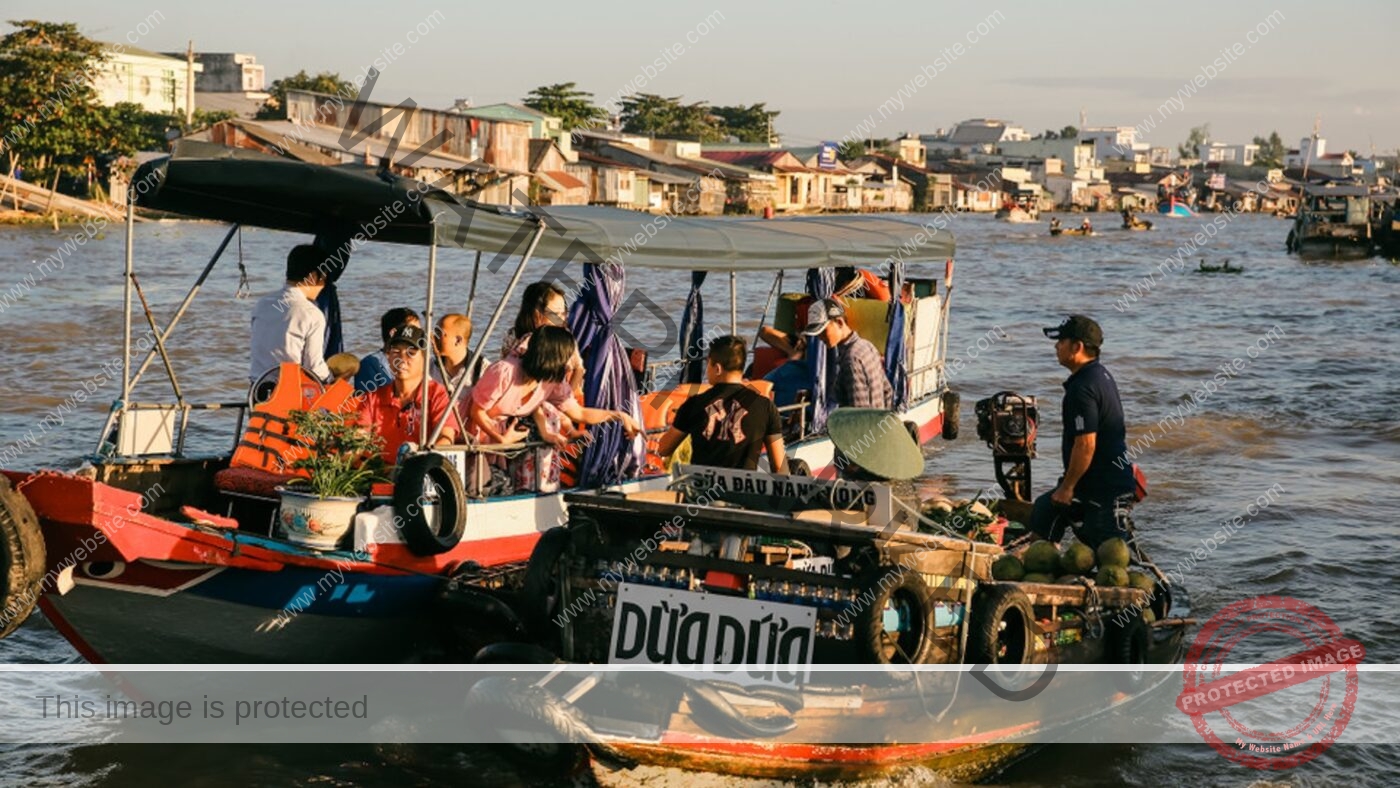
The space of Cai Rang Floating Market offers rare and powerful value for modern team-building programs. This is not an artificial “stage”, but a living ecosystem, where every movement carries its own logic, history, and emotion.
When a team-building or Amazing Race program takes place on the floating market, participants are not merely playing games – they must learn to read the environment:
- Navigating through a maze of boats
- Communicating with river traders using everyday local language
- Interpreting the cây bẹo, water flows, and trading customs
- Moving, negotiating, and coordinating within a constantly shifting setting
This makes the floating market an ideal training ground for the core capabilities of today’s organizations: adaptability, cross-cultural communication, systems thinking, and teamwork.
The river environment forces teams to abandon rigid control. They must trust one another, synchronize their actions like the boats around them, and learn to “read the flow” – both literally and metaphorically.
More importantly, the experience builds emotional connection. When participants share a bowl of noodles on a boat, laugh with a fruit vendor, or listen to a melody of đờn ca tài tử (a traditional Southern Vietnamese chamber music recognized by UNESCO) drifting across the water, they cease to be anonymous colleagues and become people bonded by a shared memory.
Exotic Vietnam – Crafting Meaningful Team-Building Journeys on the Waters of Cai Rang
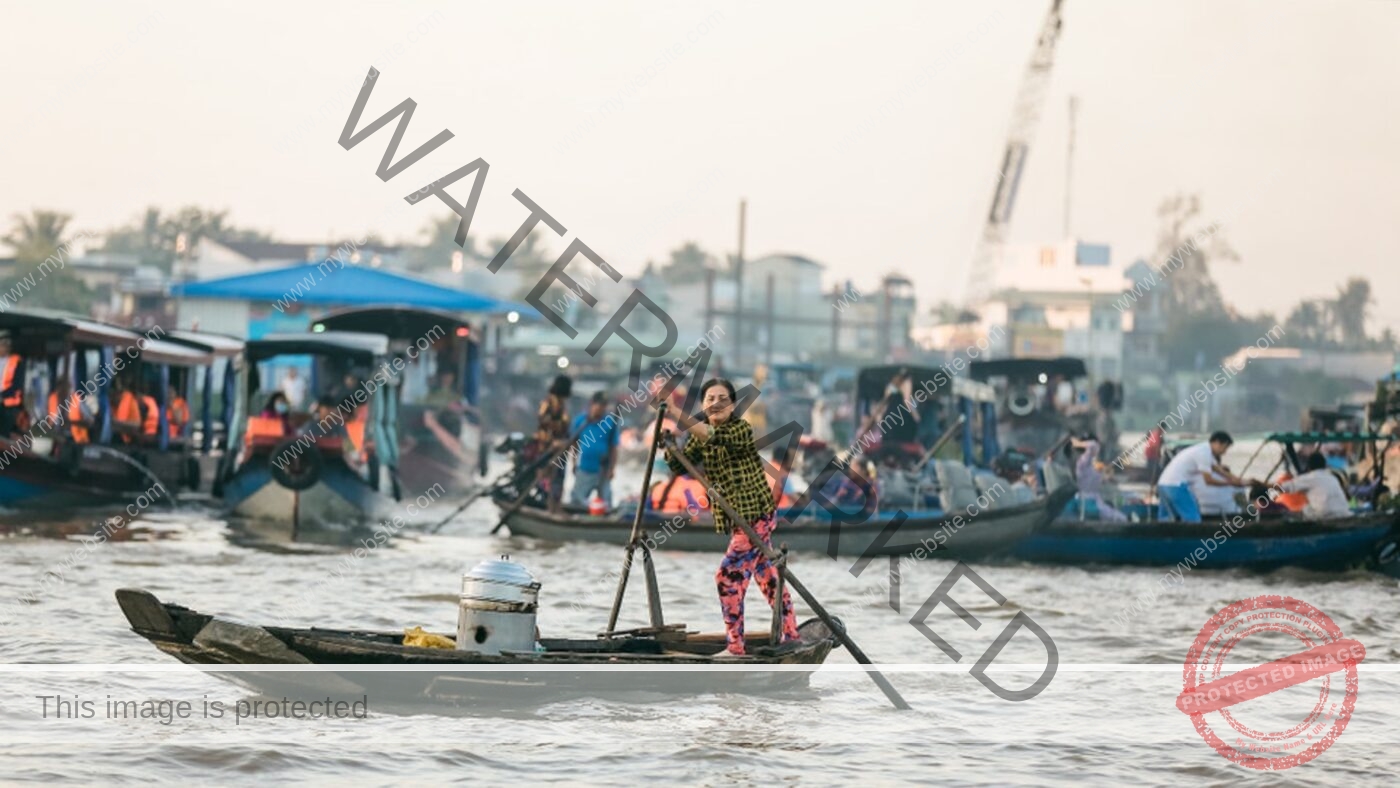
For Exotic Vietnam, Cai Rang Floating Market is not a “check-in spot,” but a living heritage space that deserves to be engaged with responsibly. Through our Team Building, Amazing Race, and Wow Mekong programs in Can Tho – Cai Rang, Exotic Vietnam follows a clear philosophy: Understand – Respect – Act. We do not bring companies here merely to “see”, but to understand the riverine civilization. Not just to “take photos”, but to respect the life of the river traders. And not just to “experience”, but to take positive action for the local community.
Exotic Vietnam works directly with local residents – from boat operators and food vendors to artisans and logistics providers. This not only ensures authenticity, but also helps sustain local livelihoods and support the long-term vitality of the floating market.
Our programs are designed according to the principles of responsible tourism:
- Minimizing plastic waste
- Respecting the living space of river communities
- Avoiding the use of culture as mere “props for performance”
Culture must be lived, not staged. With Exotic Vietnam, every cây bẹo, every boat, and every stretch of water becomes part of a living heritage map. And every company that enters this space has the opportunity to become part of its ongoing story of preservation.
