


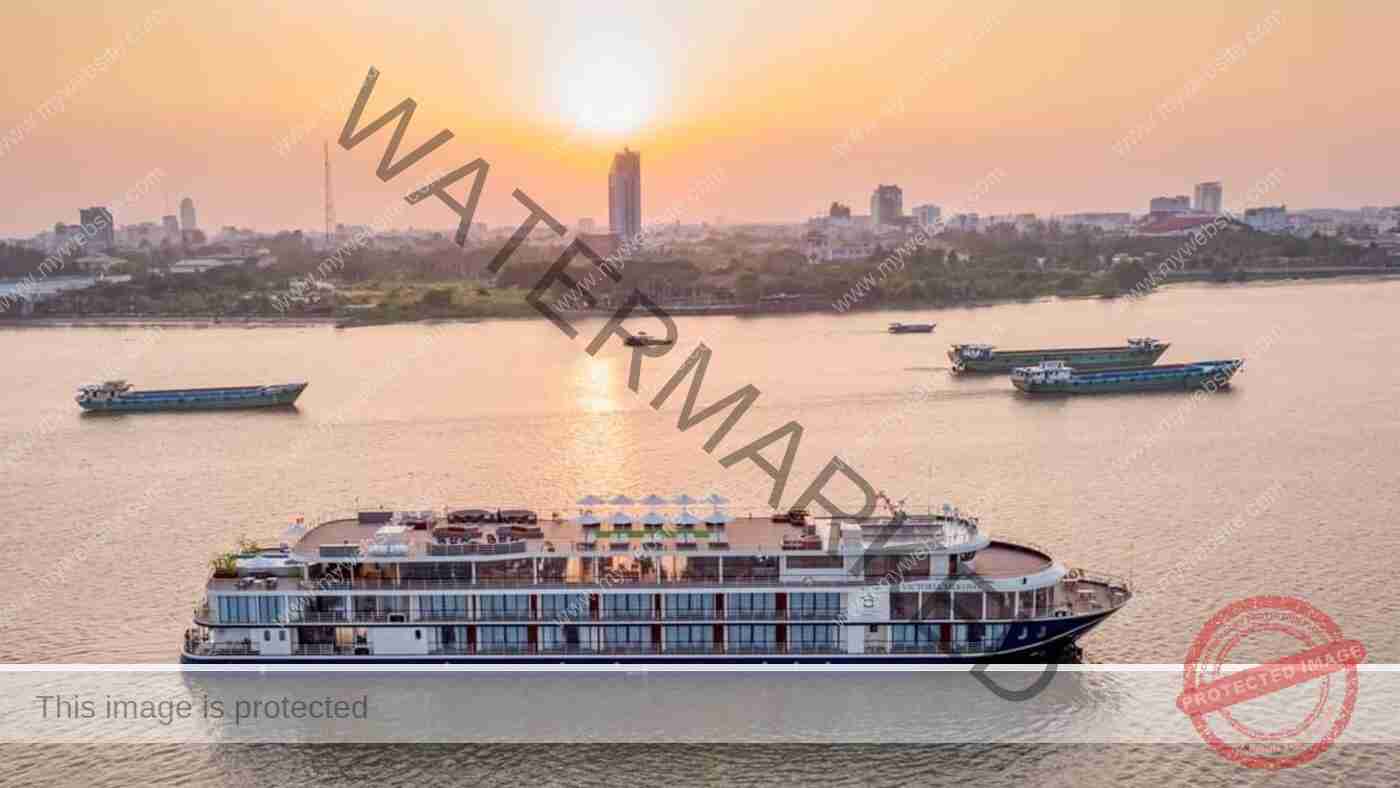
The Mekong Delta – often called “the Western Region” of southern Vietnam – is a fertile land at the southernmost tip of the country, home to a vibrant mix of Viet, Khmer, Hoa, and Cham communities. Known as Vietnam’s largest “rice bowl,” fruit basket, and freshwater fish hub, the region is nourished by the nine tributaries of the Mekong River. Its dense network of waterways forms a lifeline that shapes a lush, serene, and culturally rich riverine world.
Unlike any other region in Vietnam, the Mekong Delta has cultivated what writer Sơn Nam famously described as a distinctive “garden civilization” – a way of life where daily activities, trade, and cultural expressions are intertwined with water. From the bustling floating markets of Cái Răng, Cái Bè, and Ngã Năm to floating villages and riverside fishing hamlets hidden within narrow canals, the Delta offers a tourism identity unlike anywhere else, drawing visitors from near and far.
For these reasons, the Mekong Delta holds a vital place in Vietnam’s tourism map, thanks to:
- Its unique riverine landscape filled with authentic local experiences.
- A diverse mangrove ecosystem, highlighted by cajuput forests, nipa palm groves, and other mangrove species such as bần (Sonneratia) and đước (Rhizophora).
- Distinctive riverine culture, shaped by ways of living and farming adapted to the waterways, featuring rich local cuisine and the warm, genuine character of the people.
- Its strong community-based, homestay, and eco-tourism offerings.
Amid all these elements, the iconic sampan and river boat stand out as timeless symbols – the very soul of the Mekong Delta.
Boats and Sampans in the Daily Life of the Mekong Delta People
Since the early days of land reclamation, when road networks were still limited, boats and sampans have been the primary means of transportation for communities across the Mekong Delta. People used them for commuting, transporting goods, fishing, and even living directly on the water, forming floating houses, floating villages, and fishing hamlets at tidal convergence points – places where streams of tidal currents meet and where boats often anchor while waiting for favorable water levels. The rhythms of the Mekong Delta have long been defined by the sound of paddles striking the water and the hum of motorized boats cutting through narrow canals, creating a distinctive soundtrack of this river-based civilization.
Even as modern roads expand, boats and sampans remain inseparable from the cultural and economic life of the Delta. Watercraft in this region fall into three main groups, reflecting the people’s remarkable adaptation to a dense and intertwined waterway system.
The first group is sampans or “xuồng” – small, lightweight boats about four meters long, carrying four to six people, ideal for navigating narrow canals. Typical examples include the traditional dugout canoe, the iconic three-plank sampan with its pointed bow and stern, and larger versions such as five-plank, seven-plank, or nine-plank sampans. Smaller varieties like the vo gon sampan are commonly used for petty trading, while shrimp-fishing sampans serve shallow-water fishing needs.
The second group is larger river boats – or “ghe”, often painted with protective “eyes” on the bow according to folk customs. These boats carry goods, support river-based livelihoods, and even serve as living quarters. Key types include cargo boats with wide decks, tam ban boats for light transport, the round-bellied ghe bau for heavy loads, and fishing boats such as net boats, stake-net boats, and seine boats. Passenger ferries shuttle people across rivers, while the Khmer ghe ngo – long, beautifully carved boats – are iconic in traditional boat races and cultural festivals.
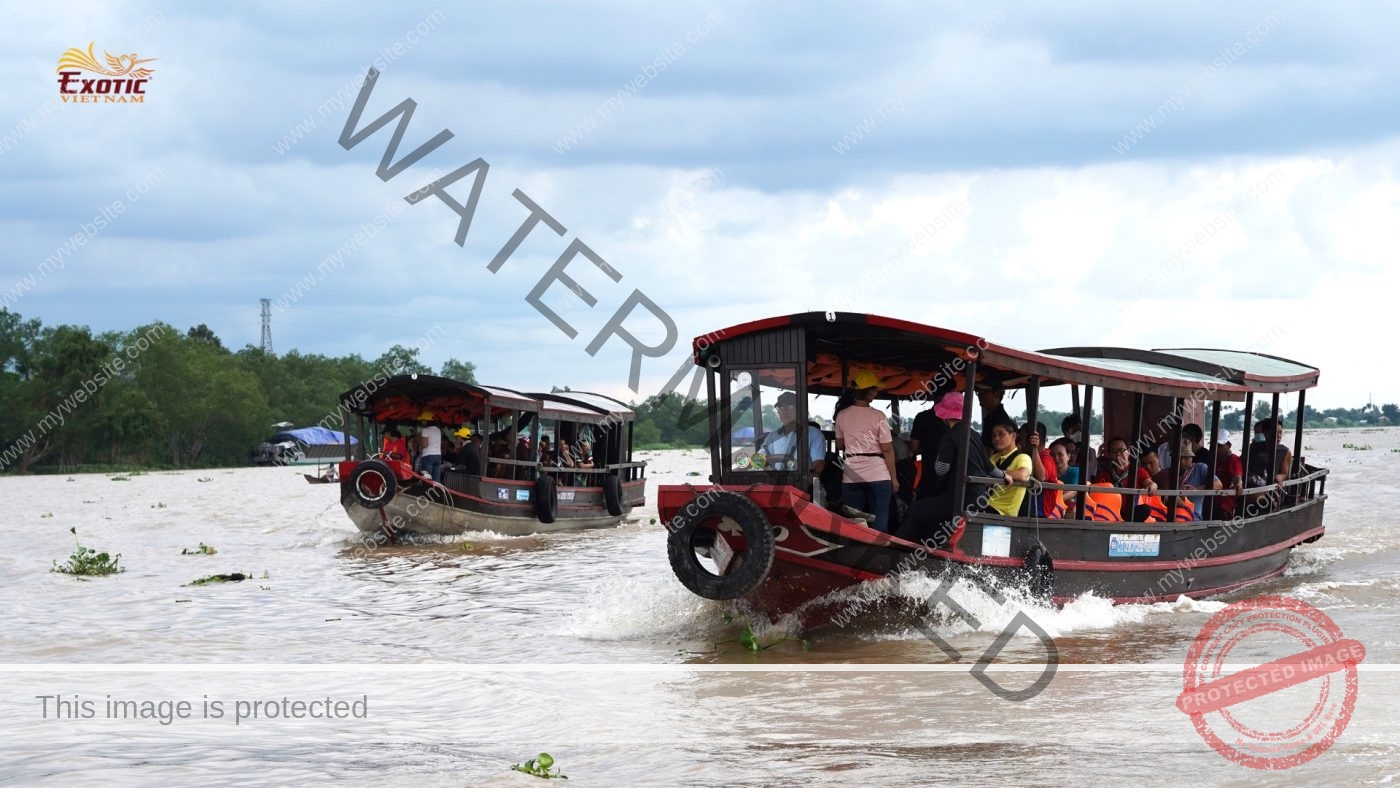
The final group includes motorized boats, known locally as vo lai or tac rang. Sleek and narrow with powerful engines, they move swiftly through networks of straight canals. Popular in Cần Thơ, Long Xuyên, and Cà Mau, these boats are also a symbol of rural tourism, taking visitors to floating markets, orchard villages, and riverside homestays.
Together, these traditional watercraft form a rich, dynamic waterway transportation system – one that perfectly reflects the culture, lifestyle, and spirit of the Mekong Delta’s river people.

Boats and Sampans in Mekong Delta Tourism
In the tourism landscape of the Mekong Delta, boats and sampans are considered the soul of every journey, allowing visitors to fully immerse themselves in the river-based way of life. On major sightseeing routes such as Mỹ Tho – Bến Tre, the Cái Răng floating market, or An Bình Islet, travelers typically move by motorized boats – vessels with canopies, spacious seating, and wide-open views, ideal for cruising along the Mekong and Bassac Rivers. From these boats, visitors can easily access lush islets, fruit orchards, and traditional craft villages.
Venturing deeper into narrow canals, the traditional three-plank sampan becomes indispensable. In places like Trà Sư Forest, Xẻo Quýt, or the orchard villages of Vĩnh Long, these small sampans glide under melaleuca canopies and across floating green vegetation, offering quintessential Mekong Delta experiences. The art of maneuvering them is equally unique: “bơi” refers to paddling while sitting at the bow or stern, using a hand-held oar to push the water, whereas “chèo” involves one or two fixed oars attached to small pivots, with the rower standing at the stern to generate steady, powerful strokes. This technique is entirely different from the foot-rowing style found in the Red River Delta of northern Vietnam.
In the vast wetlands of Cà Mau and Đồng Tháp Mười, “tắc ráng” – long, slender motorboats – offer a more exhilarating experience. Their powerful engines propel them swiftly through straight canals, revealing the pristine landscapes of melaleuca forests and mangrove ecosystems.
Alongside traditional watercraft, modern tourism in the region also features a wide range of river cruises. Dinner cruises with cultural performances on the Mekong or Bassac Rivers provide a serene setting to watch the sunset over Mỹ Tho or the shimmering nightscape of Cần Thơ. More luxurious are overnight Mekong cruises such as Victoria Mekong, Aqua Mekong, The Jahan, and La Marguerite, which connect Vietnam and Cambodia while offering upscale cabins, refined dining, open-air sky decks, and immersive cross-cultural itineraries.
All of these experiences illustrate that boats and sampans—from the humble three-plank vessels to elegant river cruises – are not merely modes of transportation but the very living identity of Mekong Delta tourism.
Boats and Sampans in Team Building Challenges – A Unique Experience Found Only in the Mekong Delta
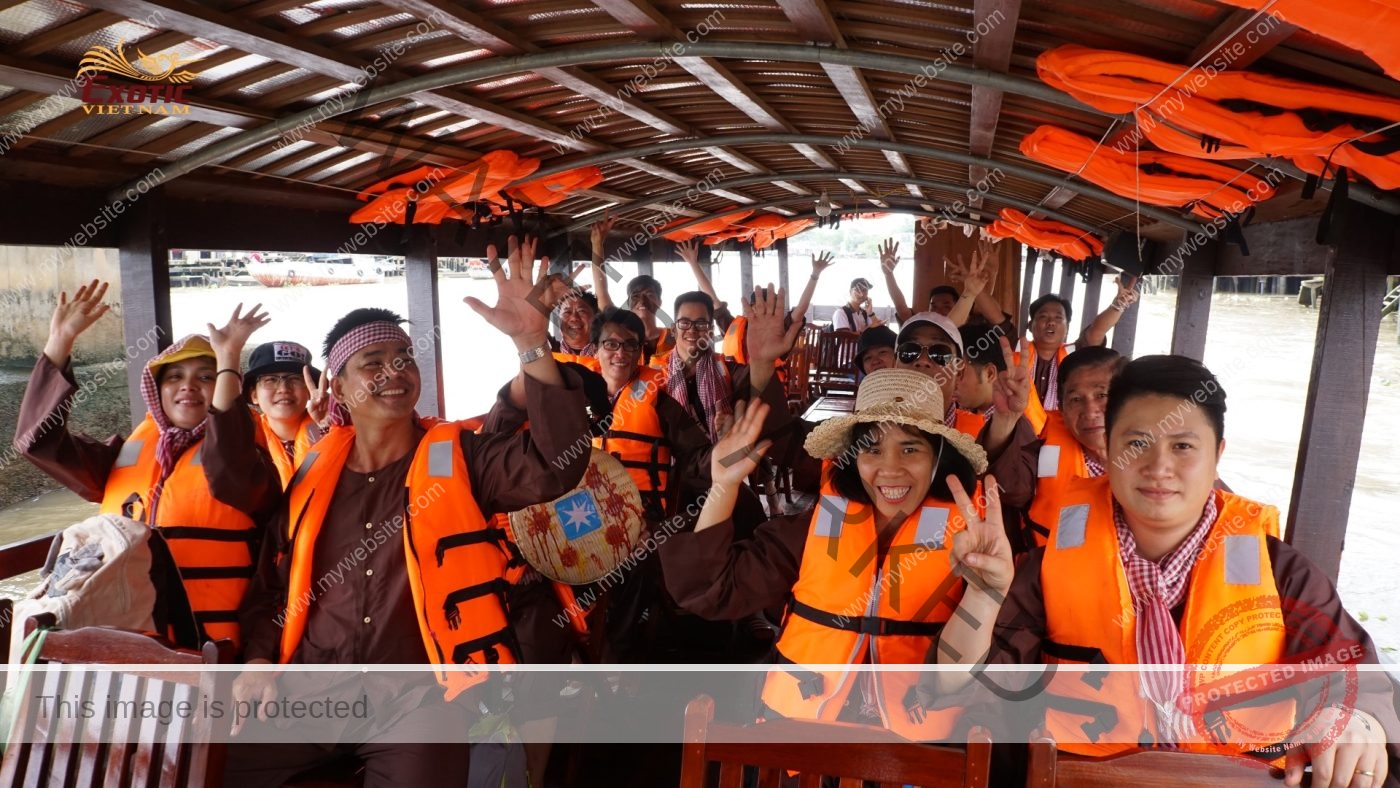
As modern team building programs increasingly emphasize hands-on experiences and local cultural identity, the Mekong Delta has emerged as an ideal destination thanks to its intricate network of waterways and its distinctive river-based lifestyle. Boats and sampans – true symbols of this region – have become the perfect elements for creating challenges that are both exciting and deeply rooted in local culture.
Participating in boat-based team building requires seamless coordination among team members. Navigating narrow canals, observing the currents, choosing the right direction, and anticipating situations help strengthen teamwork and mutual understanding. These activities also draw participants deeper into the riverine environment, where the sound of paddles hitting the water and the sway of nipa palms set a rhythm that is both peaceful and energizing.
Programs often revolve around signature challenges such as paddling through checkpoints and solving clues hidden along the canal routes; racing three-plank sampans that demand absolute unity; or using “tắc ráng” motorboats to move quickly between stations in a Mekong-style edition of The Amazing Race. Many itineraries incorporate agricultural and river-life experiences – fruit harvesting, fish catching, or interacting with floating-market vendors – providing deeper insight into the cultural landscape of the Mekong region.
In addition to traditional boats, Exotic Vietnam enhances team building with inflatable tube rafts. These rafts are highly stable, carry large loads, and are ideal for group challenges such as raft-building, water-obstacle crossings, or team transport missions. Safe and versatile, they bring a lively atmosphere and make it easier to organize large-scale water activities.
After a day full of challenges, teams can celebrate in style onboard a river cruise – a shimmering Gala Dinner on the Mekong or a romantic cocktail reception on the open-air deck under a sky full of stars. In the calmness of the river, the joy of overcoming challenges feels even more profound, while team bonds deepen and memorable moments settle in.
Programs such as The Amazing Race in Mỹ Tho, Bến Tre, Cái Bè, and Cần Thơ – organized by Exotic Vietnam – are therefore not just team building activities. They are emotional and cultural journeys, where sampans, motorboats, and innovative tube rafts become the very soul of the Mekong Delta experience.
Exotic Vietnam – A Professional Organizer Bringing Mekong Delta Culture into Team Building
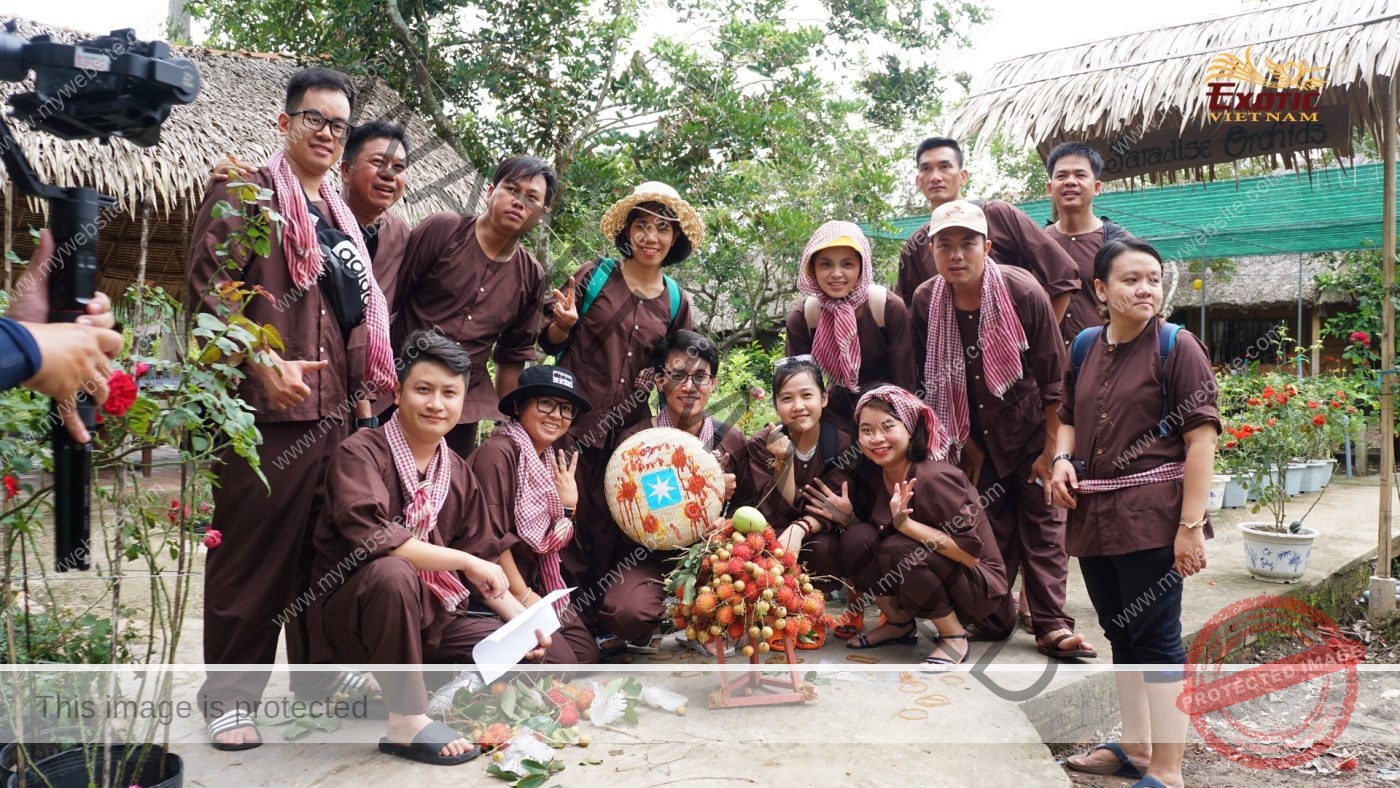
For Exotic Vietnam, every team building program is more than a “game”—it is a journey that celebrates Vietnamese culture. Sampans and river boats are not mere props, but living stories of history and heritage that we aspire to share with our clients.
What Exotic Vietnam Offers
- Authentic waterway experiences: Participants sit in sampans, paddle through emerald-green canals, and truly feel the rhythm of Mekong life.
- Unique teamwork challenges: River checkpoints, coordinated paddling, and culturally inspired tasks foster genuine collaboration.
- Community connection: Teams engage with local traders, listen to stories from floating markets, and experience đờn ca tài tử – a traditional Southern Vietnamese chamber music genre recognized by UNESCO
- Cultural and environmental awareness: Activities spread messages of protecting waterways and preserving the Delta’s garden-based culture.
Our Philosophy: “Connecting People – Honoring Values – Spreading Nature”
- Each program is an opportunity for businesses to understand Vietnamese culture more deeply.
- Every sampan and every paddle stroke helps preserve and retell the stories of the Mekong.
- Every journey with Exotic Vietnam balances entertainment, education, and emotion.
We may not promise to take you far, but we do promise experiences that feel extraordinary in their simplicity – gliding in a three-plank sampan, racing in a “tắc ráng”, or navigating river checkpoints – where the Mekong Delta reveals a rustic beauty found nowhere else.
